

Understanding Young’s Modulus: A Deep Dive into Stress, Strain, and the E = σ/ε Relationship
Introduction to Young’s Modulus and Its Importance in Materials Science
Young’s Modulus, often denoted as E, is a fundamental concept in materials science that quantifies the relationship between stress and strain in a material. This modulus offers a clear picture of how a material will deform under various loads, making it critical for engineers and scientists alike. But what exactly does this mean in practical terms?
At its core, Young’s Modulus is defined as the ratio of tensile stress (σ) to tensile strain (ε). Stress refers to the force applied per unit area, while strain measures the deformation experienced by the material in response to that stress. This relationship is not merely theoretical; it’s the backbone of many engineering applications, from the design of bridges to the fabrication of everyday items.
Understanding Young’s Modulus allows engineers to predict how materials behave under different conditions. For example, when constructing a bridge, knowing the Young’s Modulus of steel helps determine how much the steel will stretch or compress when subjected to loads. This predictive capability ensures safety and reliability in structural designs.
Moreover, the concept is vital in selecting materials for specific applications. Different materials exhibit varying values of Young’s Modulus, influencing decisions in aerospace, automotive, and civil engineering sectors. For instance, rubber has a low Young’s Modulus, which makes it ideal for shock absorption, while steel, with its high modulus, is preferred for structural integrity.
Beyond engineering, Young’s Modulus plays a significant role in research and development. Material scientists use this property to explore new composites and alloys. By manipulating the modulus through different processing techniques, they can enhance material performance for advanced applications, such as in aerospace and medical devices.
In summary, Young’s Modulus is not just a number; it’s a crucial parameter that influences design decisions and material selection across various fields. Understanding this relationship helps in crafting solutions that are both efficient and durable.
Defining Stress: Understanding Force Distribution in Materials

Stress is a fundamental concept in materials science and engineering, crucial for understanding how materials respond to external forces. At its core, stress quantifies the internal forces that develop within a material when it is subjected to external loads. To grasp this concept, we need to break it down into its components: force and area.
When a force is applied to a material, it generates internal resistance. This resistance is measured as stress, defined mathematically as the force (F) applied per unit area (A) over which it acts. The formula for stress is expressed as:
σ = F / A
Where:
– σ (sigma) is the stress,
– F is the applied force,
– A is the cross-sectional area.
Stress can be classified into several types, the most common being tensile stress, compressive stress, and shear stress. Tensile stress occurs when forces are applied to stretch a material, while compressive stress results from forces that push materials together. Shear stress, on the other hand, arises when forces act parallel to a surface.
Understanding how stress is distributed allows us to predict how materials will behave under load. For instance, consider a beam subjected to a load in the center. The stress distribution is not uniform; it peaks at the center and diminishes towards the ends. This variation is critical when designing structures to ensure they can withstand applied loads without failure.
Moreover, the direction of the applied force significantly influences how stress is distributed within a material. For example, a horizontally placed beam will experience different stress profiles when subjected to vertical loads compared to horizontal loads. Engineers must consider these factors during the design process to avoid structural failures.
Material properties also play a vital role in how stress affects a material. Different materials respond to stress differently based on their composition and structure. Brittle materials, like glass, may fail suddenly under high stress, while ductile materials, such as steel, can deform significantly before breaking. This understanding is crucial for selecting the right materials for specific applications.
In summary, stress is more than just a number; it encapsulates how forces interact with materials. By comprehending how stress is defined and distributed, engineers can better predict material behavior, leading to safer and more efficient designs. Understanding these principles lays the groundwork for deeper exploration into related concepts, such as strain and Young’s modulus.
Exploring Strain: The Response of Materials to Stress
Strain describes how materials respond when subjected to stress. It’s a measure of deformation, quantifying how much a material changes its shape relative to its original dimensions. When stress is applied, materials experience internal forces that lead to various deformation types—tensile, compressive, or shear. Understanding these responses is crucial for engineers and designers who need to predict how materials will behave under loads.
There are two primary types of strain: normal strain and shear strain. Normal strain occurs when a material is subjected to axial loads. It can be further classified into tensile strain (when a material is stretched) and compressive strain (when it’s compressed). For instance, when a steel beam is pulled, it elongates, leading to tensile strain. The formula for normal strain (ε) is straightforward:
- ε = ΔL / L0
Here, ΔL represents the change in length, and L0 is the original length. This ratio provides a dimensionless quantity that indicates how much a material has deformed.
On the other hand, shear strain arises when forces are applied parallel to a material’s surface, causing it to deform laterally. Shear strain (γ) is defined as:
- γ = Δx / h
In this equation, Δx represents the displacement of the material’s layers, while h is the material’s height. Shear strain helps in understanding how materials respond to forces that cause layers to slide over one another.
The relationship between stress and strain is not always linear. In many materials, particularly metals, the initial response is linear according to Hooke’s Law, which states that stress (σ) is proportional to strain (ε) up to the yield point. Beyond this point, materials begin to exhibit plastic deformation, and the relationship can become complex.
For example, rubber exhibits a highly nonlinear response. When a rubber band is stretched, it initially follows Hooke’s Law, but as it’s stretched further, the material’s response becomes less predictable. This nonlinear behavior is crucial in applications requiring flexibility and resilience.
Understanding how strain works sets the foundation for applying Young’s Modulus (E), which quantifies a material’s stiffness. This modulus is essential for engineers who need to ensure that structures can withstand applied loads without failing. Whether designing bridges or aircraft, knowing how materials strain under stress is key to achieving safety and efficiency.
In summary, exploring strain involves not just the calculations of deformation but a comprehensive understanding of how materials react under various stresses. This knowledge is paramount in engineering applications, where material selection can significantly impact a structure’s performance.
The Mathematical Relationship: Deriving the Formula E = σ/ε
When exploring Young’s Modulus, we must understand the mathematical relationship that defines it: E = σ/ε. This equation connects stress and strain through a constant known as the modulus of elasticity. Let’s break this down step by step.

First, we need to define what stress (σ) and strain (ε) are. Stress is the force applied per unit area within materials, expressed in pascals (Pa) or newtons per square meter (N/m²). Mathematically, stress is represented as:
σ = F/A
where F is the force applied and A is the cross-sectional area of the material. This relationship shows that stress measures how much force is being exerted on a material relative to its size.
Next, we consider strain. Strain is a dimensionless quantity that represents the deformation of a material relative to its original length. It is calculated as:
ε = ΔL/L₀
where ΔL is the change in length and L₀ is the original length of the material. This ratio indicates how much a material stretches or compresses in response to an applied stress.
Now, the relationship between stress and strain is where Young’s Modulus (E) comes into play. Young’s Modulus quantifies how much a material will deform under a given load. The formula E = σ/ε allows us to express this relationship mathematically.
To derive this formula, we start with the definitions of stress and strain. If we plug in the definitions into the equation, we get:
E = (F/A) / (ΔL/L₀)
This can be rearranged to:
E = (F * L₀) / (A * ΔL)
This rearrangement makes it clear how E relates to the applied force, the material dimensions, and the resulting deformation. Young’s Modulus thus provides critical insights into the material properties of solids.
This relationship holds true within the elastic limit of materials, meaning that they will return to their original shape once the applied stress is removed. Beyond this limit, materials may experience plastic deformation, and the linear relationship between stress and strain no longer applies.
In practical terms, understanding E = σ/ε helps engineers and scientists predict how materials will behave under different loads. It informs decisions regarding material selection for construction, manufacturing, and various applications where strength and elasticity are crucial.
By grasping this mathematical foundation, you can appreciate the significance of Young’s Modulus in material science and engineering. It’s not just numbers; it’s a fundamental concept that underpins many real-world applications.
Types of Materials and Their Young’s Modulus Values
When discussing Young’s modulus, understanding the variety of materials and their corresponding values is crucial. Young’s modulus, denoted as E, quantifies a material’s stiffness. It represents the ratio of stress (σ) to strain (ε), showcasing how much a material deforms under load. Different materials exhibit vastly different Young’s modulus values, reflecting their unique properties and applications.
Metals
Metals generally exhibit high Young’s modulus values, making them suitable for structural applications. For example, steel, one of the most commonly used metals, has a Young’s modulus of approximately 200 GPa (gigapascals). This high value indicates that steel can withstand significant stress without deforming excessively.
Aluminum, while lighter, has a Young’s modulus around 69 GPa. It’s used in various applications where weight savings are essential, such as in aerospace structures. Copper, known for its excellent conductivity, has a Young’s modulus of about 110 GPa. These values highlight the strength and versatility of metals in engineering.
Polymers
Polymers, on the other hand, show a wide range of Young’s modulus values, reflecting their diversity. For instance, rubber has a very low Young’s modulus of around 0.01 to 0.1 GPa. This low value allows rubber to stretch and deform easily, making it perfect for applications like seals and gaskets.
In contrast, high-performance polymers like polycarbonate exhibit a Young’s modulus of about 2.4 GPa. This higher rigidity makes them suitable for protective gear and optical applications. Understanding these differences is vital for selecting the right material for specific uses.
Composites
Composite materials can also present varied Young’s modulus values, depending on their constituent materials. For example, carbon fiber reinforced polymers can achieve a Young’s modulus of over 70 GPa. This high value, combined with their lightweight nature, makes them popular in high-stress applications like automotive and aerospace industries.
Glass fiber composites typically have a Young’s modulus of around 30 GPa, making them suitable for applications requiring both flexibility and strength. The ability to tailor composites with specific matrix and fiber combinations allows engineers to meet precise performance criteria.
Concrete and Ceramics
Concrete and ceramics display different behaviors under stress. Concrete has a Young’s modulus ranging between 20 to 30 GPa, which contributes to its widespread use in construction. However, its brittle nature means it can fail under tensile stress.
Ceramics, known for their hardness and wear resistance, typically have a Young’s modulus that can exceed 200 GPa, depending on the type. This makes ceramics ideal for applications like cutting tools or dental implants.
Understanding the Young’s modulus values across different materials aids in making informed decisions in engineering and design processes. Each material’s unique properties dictate its suitability for specific applications, ensuring optimal performance in real-world scenarios.
Applications of Young’s Modulus in Engineering and Design
Young’s Modulus plays a crucial role in various engineering and design applications. It’s not just a number; it’s the backbone of material selection and structural integrity. When engineers design structures, they rely on Young’s Modulus to determine how materials will behave under different loads.
One of the most significant applications is in the construction industry. Here, Young’s Modulus helps engineers assess materials for beams, columns, and slabs. For instance, steel, with a high Young’s Modulus around 200 GPa, is chosen for high-rise buildings due to its ability to withstand significant stress without deforming. Concrete, while much lower in Young’s Modulus, is often reinforced with steel to enhance its performance in structural applications.
Another field where Young’s Modulus is vital is aerospace engineering. Aircraft components must be lightweight yet strong. Engineers often select materials like titanium or advanced composites, which offer favorable Young’s Modulus values. These materials ensure that aircraft wings and fuselages can handle aerodynamic forces without succumbing to excessive deformation, ensuring safety and performance.
In mechanical engineering, Young’s Modulus is essential for designing mechanical components. It helps in calculating the deflection of beams under load, which is critical for ensuring that machinery operates smoothly and safely. For example, in designing a bridge, engineers must consider how the bridge will flex and bend under the weight of vehicles. They use Young’s Modulus to predict this behavior accurately.
The automotive industry also heavily relies on Young’s Modulus when selecting materials for vehicle frames and body panels. Lightweight materials with optimal Young’s Modulus values can enhance fuel efficiency while maintaining safety standards. For example, aluminum alloys are often chosen for their excellent strength-to-weight ratio, contributing to lighter vehicles without sacrificing structural integrity.
Moreover, the principles of Young’s Modulus extend into the realm of civil engineering. When designing roads and pavements, engineers utilize this modulus to predict how materials will respond to traffic loads over time. Selecting appropriate materials, such as asphalt or concrete with specific Young’s Modulus values, ensures durability and longevity.
In summary, Young’s Modulus is not just a theoretical concept; it’s an essential factor in engineering and design across various industries. Understanding how materials behave under stress and strain allows engineers to create safe, efficient, and effective structures and components.
Factors Affecting Young’s Modulus: Temperature, Composition, and Microstructure
Temperature
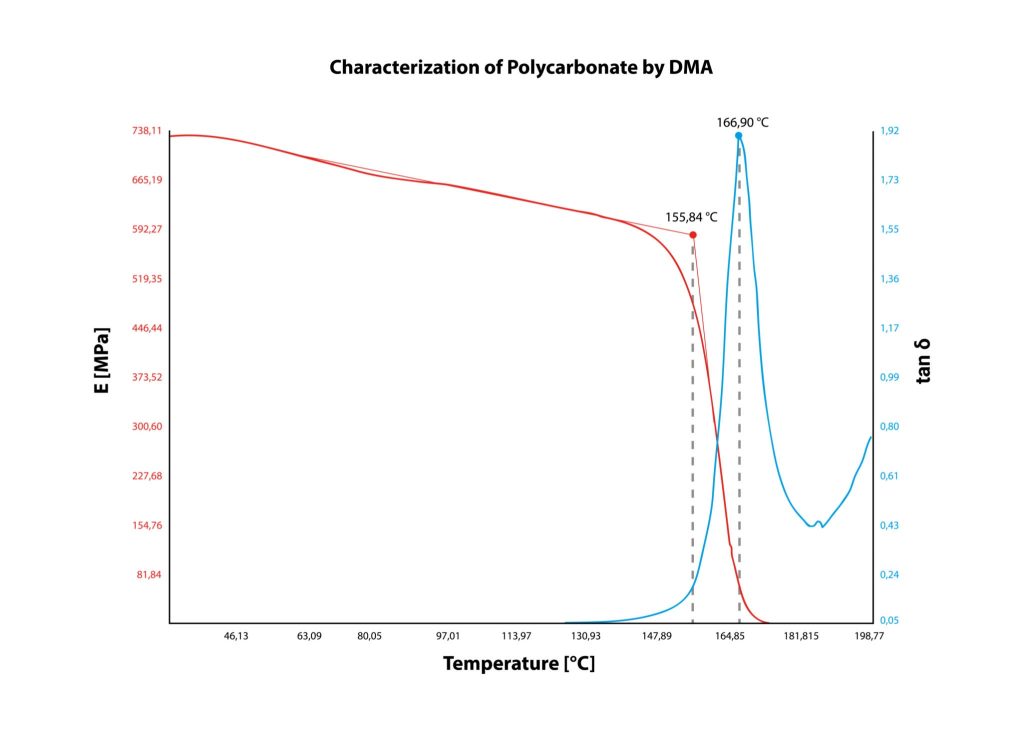
Temperature plays a significant role in determining Young’s Modulus in materials. As temperature increases, most materials experience a decrease in stiffness. This phenomenon occurs because higher temperatures provide more thermal energy to the atoms in a material, allowing them to vibrate more freely.
For instance, polymers can exhibit a sharp decline in Young’s Modulus as they transition from a glassy state to a rubbery state at their glass transition temperature. In metals, the effect of temperature is often less drastic but still noticeable. For example, steel maintains its strength at elevated temperatures, but its modulus begins to decrease beyond certain thresholds.
Understanding this temperature dependency is crucial for applications involving varying thermal conditions, like aerospace or automotive components, where materials must withstand extreme temperatures without compromising structural integrity.
Composition
The composition of a material impacts its Young’s Modulus significantly. Different elements and their arrangements influence atomic bonding, which directly affects stiffness. For example, the addition of carbon to iron results in steel, which is considerably stronger and exhibits a higher Young’s Modulus than pure iron.
Alloys often demonstrate unique properties that differ from their constituent materials. For instance, aluminum alloys can exhibit a range of Young’s Modulus values based on the types and amounts of alloying elements like copper or magnesium. The phase distribution and the presence of secondary phases can also impact how a material deforms under stress.
In ceramics, the addition of specific oxides can enhance strength and stiffness, leading to a higher Young’s Modulus. Therefore, selecting the proper composition is key to tailoring materials for specific applications, especially in fields like aerospace, where weight and strength are critical.
Microstructure
Microstructure is another critical factor influencing Young’s Modulus. The arrangement and size of grains within a material affect how it responds to stress. In metallic materials, finer grains typically lead to higher strength and stiffness due to the increased number of grain boundaries, which can impede dislocation movement.
For instance, in heat-treated steels, the transformation of austenite to martensite results in a fine microstructure that significantly increases stiffness. Conversely, a coarser grain structure can lead to a lower Young’s Modulus due to enhanced ductility.
In composites, the distribution and orientation of fibers within a matrix material significantly affect the overall modulus. For example, aligning fibers in the direction of the load can dramatically enhance stiffness compared to a random orientation.
Through careful control of microstructure during manufacturing processes like forging, heat treatment, or alloying, engineers can design materials with precise mechanical properties tailored to specific structural applications. Understanding these factors is essential for material scientists and engineers aiming to optimize performance in real-world applications.
Experimental Methods for Measuring Young’s Modulus
Measuring Young’s modulus, a fundamental property of materials, requires precise experimental methods that account for stress and strain. Different techniques exist, each suited for specific materials and applications. Let’s explore the most commonly used methods in detail.
Tensile Testing
Tensile testing is perhaps the most direct way to determine Young’s modulus. In this method, a sample, typically a metal or polymer, is subjected to a uniaxial tensile load until it deforms.
1. **Sample Preparation**: Prepare a standardized specimen, often in the form of a dog-bone shape, to ensure uniform stress distribution.
2. **Loading Mechanism**: Use a universal testing machine that applies a controlled tensile force. The machine includes extensometers to precisely measure elongation.
3. **Data Collection**: As the load is applied, both the force and the corresponding elongation are recorded.
4. **Calculating Young’s Modulus**: Plot a stress-strain curve by calculating stress (force/area) and strain (change in length/original length). The slope of the linear portion of this curve gives Young’s modulus.
This method is reliable but can be affected by factors like sample geometry and temperature.
Compression Testing
For some materials, especially brittle ones, compression testing is more applicable. The process mirrors tensile testing, but instead, the sample is compressed.
1. **Sample Setup**: The sample, often a cylindrical or cube shape, is placed in a compression testing machine.
2. **Loading**: The machine applies load until the material yields or fractures.
3. **Measurement**: Just like in tensile testing, measure the load and deformation.
4. **Data Analysis**: Calculate stress and strain. The slope of the stress-strain curve during the elastic region provides Young’s modulus.
Compression testing can be advantageous in testing materials like ceramics or concrete, which are stronger in compression than tension.
Bending Tests
Bending tests utilize a different approach to measure Young’s modulus, particularly in thin materials like beams or plates.
1. **Setup**: A beam is supported at both ends and subjected to a load at its center.
2. **Load Application**: Measure the deflection at the center of the beam as the load is applied.
3. **Calculating Young’s Modulus**: Use the formula \(E = \frac{PL^3}{4wd^3}\), where \(P\) is the load, \(L\) is the length between supports, \(w\) is the width, and \(d\) is the depth of the beam.
This method is particularly useful for composite materials and can reveal how materials behave under practical loading conditions.
Dynamic Methods
Dynamic methods, such as resonance frequency techniques, offer an alternative to static testing.
1. **Sample Vibration**: The sample is excited to resonate, and its natural frequency is measured.
2. **Calculating Young’s Modulus**: Young’s modulus can be derived from the relationship between frequency, density, and geometry of the sample.
Dynamic methods can be advantageous for thin films and coatings, providing quick results with minimal sample preparation.
Conclusion
Each of these methods has its strengths and weaknesses, and the choice often depends on the material type and specific application requirements. Understanding these techniques will enhance your grasp of Young’s modulus and its implications in material science.
Common Misconceptions About Young’s Modulus
Young’s modulus is a fundamental concept in materials science and engineering, yet several misconceptions often surround it. These misunderstandings can lead to confusion when applying this principle in real-world scenarios. Let’s explore the most common misconceptions regarding Young’s modulus.
One prevalent myth is that Young’s modulus is a measure of a material’s strength. While it does provide insight into how much a material will deform under stress, it doesn’t indicate the maximum load a material can withstand before failure. Young’s modulus defines the relationship between stress (σ) and strain (ε) in the elastic range, which means it only applies to materials that return to their original shape after the load is removed. Once the yield point is exceeded, other factors come into play, and the material’s strength becomes critical.
Another misconception is that Young’s modulus is a constant for all materials. In reality, it varies significantly among different materials and even within the same material depending on the temperature, strain rate, and other environmental factors. For example, the Young’s modulus of steel is around 200 GPa, while rubber is only about 0.01 GPa. This variance highlights the importance of context when discussing Young’s modulus; it’s not a universal figure but rather a characteristic that can change based on conditions.
Some people mistakenly believe that Young’s modulus can be used to compare materials directly. This is misleading because the modulus doesn’t account for other important properties, such as ductility, toughness, or fatigue resistance. A material with a high Young’s modulus may not necessarily perform better than one with a lower modulus when subjected to different types of stress or in different applications. For instance, brittle materials might have a high modulus but can fail unexpectedly under tensile stress.
Lastly, there’s a misconception that Young’s modulus is only applicable to metallic materials. While metals do exhibit a well-defined Young’s modulus, polymers, ceramics, and composites also have their own moduli. Each material type behaves differently under stress, and understanding these differences is crucial for engineers and designers. For instance, polymers can have non-linear elastic behavior, which complicates the application of Young’s modulus in certain situations.
By addressing these misconceptions, we can better understand the true implications of Young’s modulus and how to apply it effectively in engineering and materials science. Recognizing that it’s not a catch-all measure but rather one piece of a much larger puzzle is essential for making informed decisions regarding material selection and application.
Conclusion: The Significance of Young’s Modulus in Real-World Applications
Young’s modulus is more than just a number in a textbook. It plays a vital role in countless real-world applications, influencing how materials are selected and utilized in engineering, construction, and manufacturing. Understanding this modulus can lead to safer, more efficient designs and innovations across various industries.
In civil engineering, Young’s modulus is crucial when designing structures like bridges and buildings. Engineers must choose materials that can withstand the forces they’ll encounter. For example, steel, which has a high Young’s modulus, is often used in skyscrapers. This property allows steel to resist deformation under heavy loads, ensuring the structure remains stable and secure.
Moreover, in the automotive industry, selecting materials based on their Young’s modulus can significantly affect vehicle performance. Lightweight materials with suitable stiffness are essential for fuel efficiency and safety. For instance, composite materials with tailored Young’s moduli are increasingly used in car manufacturing. These materials provide necessary strength while reducing overall weight, leading to better fuel economy and lower emissions.
In aerospace, the stakes are even higher. Aircraft must endure various stresses during flight. Engineers rely on Young’s modulus to choose materials that can handle these stresses without failure. Carbon fiber reinforced polymers, with their high strength-to-weight ratio, are often selected for critical components. Here, the precise understanding of Young’s modulus ensures safety and performance, especially during extreme conditions.
Medical applications also benefit from this modulus. In prosthetics, for instance, the materials used must mimic the mechanical properties of bone. Engineers use Young’s modulus to select the right materials that can withstand cyclic loading while providing comfort and functionality for the user.
Lastly, in the realm of electronics, the properties of materials can significantly affect device performance. Young’s modulus helps in designing components that need to withstand thermal expansion and mechanical stress without deforming or failing. This is particularly important in microelectronics, where even the slightest deformation can lead to device failure.
In conclusion, Young’s modulus is a cornerstone in the realm of material science and engineering. Its significance cannot be overstated. As technology progresses, understanding and applying this modulus will continue to be essential for developing innovative solutions that enhance safety, efficiency, and sustainability in everyday products and infrastructure. By grasping the implications of Young’s modulus, engineers and designers can make informed decisions that directly impact the performance and longevity of their projects.