
BASIC CONCEPTS
The Laws That Govern Our Universe
Physics fundamentals provide precise explanations of how objects move, energy is stored and transferred, and matter interacts. These core principles form the foundation of modern science and engineering.

The Lens and Mirror Equation: Understanding 1/f = 1/u + 1/v

Acceleration in Physics: Types, Formula, and Step-by-Step Examples

Unveiling the Genius: The Real-Life Story of Albert Einstein

Newton’s Laws of Motion: Formulas, Examples, and Insights
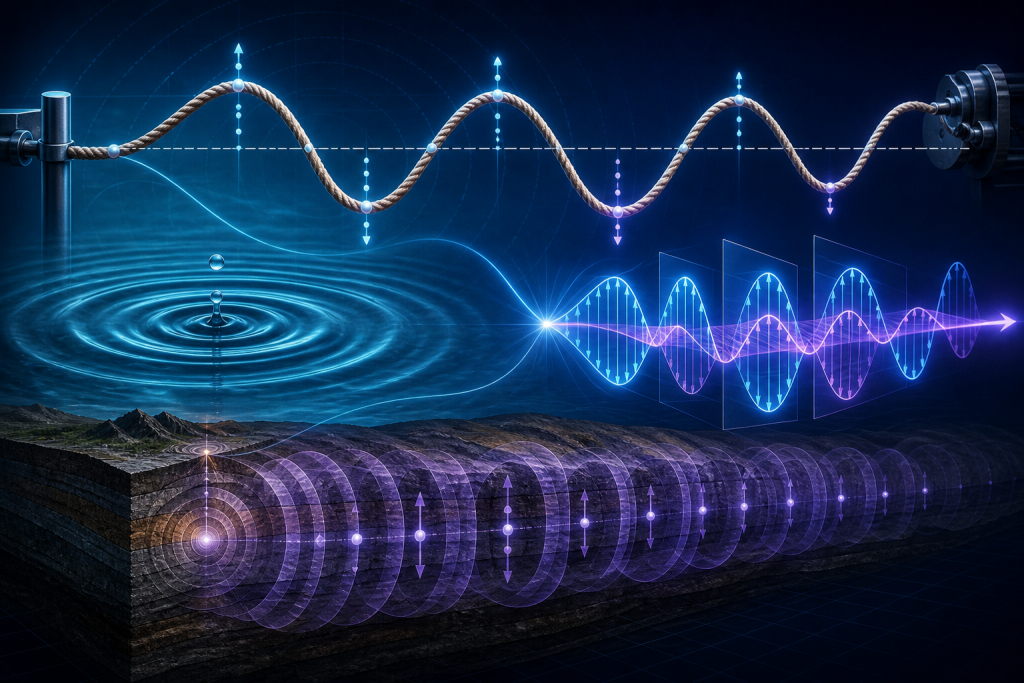
Transverse Waves: Diagrams, Properties, and Real-World Examples

Energy in Physics: Definition, Types, Conservation Principles, and Units Explained
WHY PHYSICS FUNDAMENTALS
The physics education platform you’ve been looking for.
Far more than just a website—it’s an immersive learning environment. We help you master the core concepts of physics through hands-on interaction, instead of endless memorization.
Complete Physics Curriculum
Explore everything from classical mechanics to electromagnetism and quantum theory. Get crystal-clear, in-depth explanations crafted by professional physicists.
Dynamic Simulations
Adjust variables, see the immediate impact, and develop your intuition naturally. Go beyond the textbook by learning through hands-on experimentation.
Free Calculators
Get the whole picture, not just the final answer. Whether you’re calculating projectile motion or Ohm’s Law, every tool displays the formula and step-by-step working.
Concepts Over Memorization
We don’t just throw equations at you. We break down the physical intuition—the ‘why’ behind the science—so you actually understand the concepts before we ever touch the math.
Highly Visual Learning
We make complex topics like vector fields and orbital mechanics easy to grasp. Through purposefully designed animations and detailed diagrams, abstract ideas are transformed into clear, intuitive explanations.
100% Free & Accessible
Top-tier physics education shouldn’t come with a price tag. We believe learning belongs to everyone, which is why every single article, calculator, and game on our platform is completely free.
Comprehensive Curriculum
The entire physics universe, decoded from the absolute basics.
Learn for Life, Not Just the Test: Don’t just study to pass. We teach all the physics fundamentals—taking you from everyday classical mechanics to the strange quantum world—with a focus on deep, lasting understanding rather than rote memorization.
Kinematics
Velocity, Acceleration, SUVAT Equations, Graphs of Motion
Eelctromagnetism
Capacitors, Magnetic Fields, Faraday’s Law, Electric Fields, Circuits, Kirchhoff’s Laws
Now available
The only resource you need to master physics fundamentals.
LATEST ARTICLES
Let’s Start Learning




Defining Physics Fundamentals
At their core, physics fundamentals are the universal laws that govern how reality operates at every possible scale. Gaining a deep understanding of these principles is the single most valuable step any aspiring scientist or engineer can take.
Classical Mechanics
Classical mechanics is built entirely on the foundation of Newton’s three laws. The first introduces the concept of inertia, the second (F = ma) defines the relationship between force and acceleration, and the third dictates action-reaction pairs. Working together, these principles allow us to accurately predict everything from the arc of a projectile to satellite orbits and the physical stresses on engineered structures.
Waves & Optics
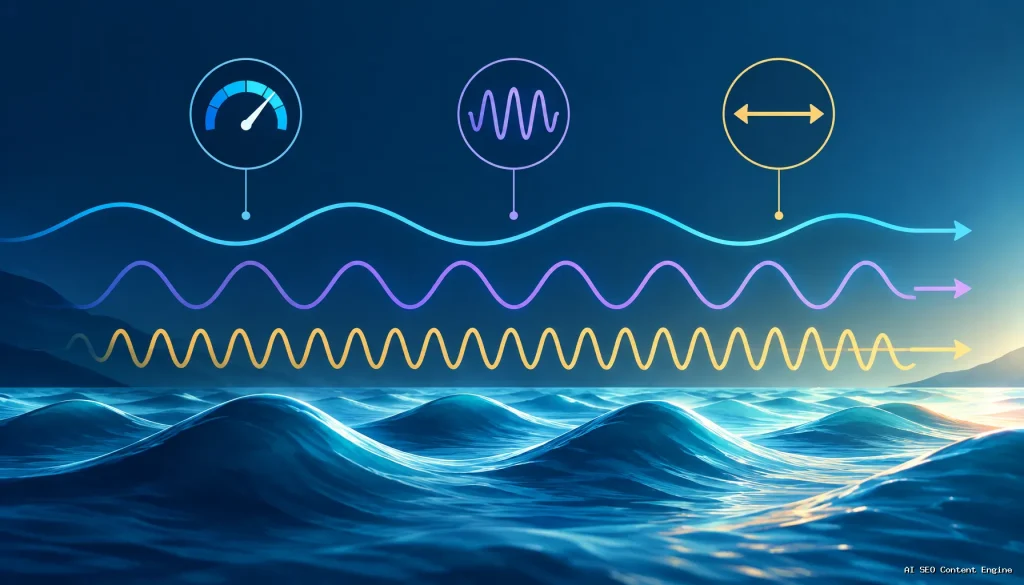
Wave physics explores exactly how energy travels through space. For example, transverse waves—where the oscillation happens perpendicular to the direction of travel—make up the entirety of electromagnetic radiation. At the heart of this field is the universal wave equation, v = fλ, which seamlessly links speed, frequency, and wavelength for every single type of wave in existence.
Energy & Thermodynamics
Energy is the ultimate thread tying all of physics together. The principle of energy conservation—stating that energy cannot be created or destroyed, only transformed—is one of the most profound truths in science. This fundamental rule is formalized in the first law of thermodynamics, which governs heat and work, and extends into the kinetic theory of gases, directly linking microscopic molecular motion to macroscopic pressure.
Forces & Conservation Laws
Conservation laws represent some of the most profound principles in all of physics. For instance, the conservation of momentum dictates the precise outcome of every single collision. Alongside these rules is Newton’s law of universal gravitation, which calculates the attractive force between any two masses—explaining everything from a falling ball to the orbit of the Moon. Together, these foundational laws form the bedrock of classical mechanics.
join +100 physics learners are already inside
Get the updates that actually matter.
We only email you when we publish a high-quality article, calculator, or tool. Zero spam and zero fluff—just the exact resources you need to succeed.
Free forever · No spam · Unsubscribe in one click
explore
Explore the Full Platform
Find every article, core topic, interactive resource, and expert author profile organized in one central hub for seamless browsing.
all articles
PHYSICS GLOSSARY
- Acceleration
- Amplitude
- Angular Momentum
- Atom
- Banked Curve
- Bernoulli’s Principle
- Black-Body Radiation
- Bohr Model
- Bridge Structural Physics
- Buoyancy
- Capacitance
- Capacitor
- Carnot Engine
- Centre of Gravity
- Centre of Mass
- Centrifugal Force
- Centripetal Force
- Circular Motion
- Combined Gas Law
- Conservation of Energy
- Conservation of Momentum
- Coulomb’s Law
- De Broglie Wavelength
- Density
- Diffraction
- Displacement
- Doppler Effect
- Elastic Collision
- Electric Charge
- Electric Circuit
- Electric Current
- Electric Field
- Electric Potential
- Electric Potential Energy
- Electrical Power
- Electromagnetic Induction
- Electromagnetic Spectrum
- Electromagnetic Waves
- Electron
- Energy
- Entropy
- Equilibrium
- Escape Velocity
- Faraday’s Law
- First Law of Thermodynamics
- Free Fall
- Frequency
- Friction
- Gravitational Field
- Gravitational Force
- Gravitational Potential Energy
- Half-Life
- Heat
- Heat Transfer
- Heisenberg Uncertainty Principle
- Hooke’s Law
- Ideal Gas Law
- Impulse
- Inelastic Collision
- Inertia
- Interference
- Isotope
- Kinetic Energy
- Kinetic Theory of Gases
- Kirchhoff’s Laws
- Latent Heat
- Lens Equation
- Lenz’s Law
- Longitudinal Wave
- Magnetic Field
- Magnetic Flux
- Magnetic Force
- Mass
- Mass-Energy Equivalence
- Mechanical Energy
- Momentum
- Net Force
- Neutron
- Newton’s First Law
- Newton’s Second Law
- Newton’s Third Law
- Normal Force
- Nuclear Binding Energy
- Nuclear Fission
- Nuclear Fusion
- Nucleus
- Ohm’s Law
- Orbital Mechanics
- Pendulum
- Period
- Photoelectric Effect
- Photon
- Polarisation
- Potential Energy
- Power
- Pressure
- Projectile Motion
- Proton
- Quantum Numbers
- Quantum Tunnelling
- Radiation
- Radioactive Decay
- Reflection
- Refraction
- Refractive Index
- Relative Velocity
- Resistance
- Resistors in Series and Parallel
- Resonance
- Scalar
- Second Law of Thermodynamics
- Simple Harmonic Motion
- Snell’s Law
- Special Relativity
- Specific Heat Capacity
- Speed
- Speed of Light
- Spring Constant
- Standing Wave
- Stress and Strain
- Superposition
- SUVAT Equations
- Temperature
- Tension
- Terminal Velocity
- Thermal Energy
- Thermal Expansion
- Torque
- Total Internal Reflection
- Transverse Wave
- Vector
- Velocity
- Voltage
- Wave
- Wave Speed
- Wave-Particle Duality
- Wavelength
- Weight
- Work
- Work-Energy Theorem
- Young’s Double-Slit Experiment
- Young’s Modulus