Understanding Normal Force: When Is It Not Equal to mg?
When Is Normal Force Not Equal to mg? Normal Force Explained in simple terms.


When Is Normal Force Not Equal to mg? Normal Force Explained in simple terms.

Explore the concept of center of mass with clear definitions, formulas, and practical examples to enhance your understanding in physics.

Introduction to Young’s Modulus and Its Importance in Materials Science Young’s Modulus, often denoted as E, is a fundamental concept in materials science that quantifies the relationship between stress and strain in a material. This modulus offers a clear picture of how a material will deform under various loads, making it critical for engineers and…
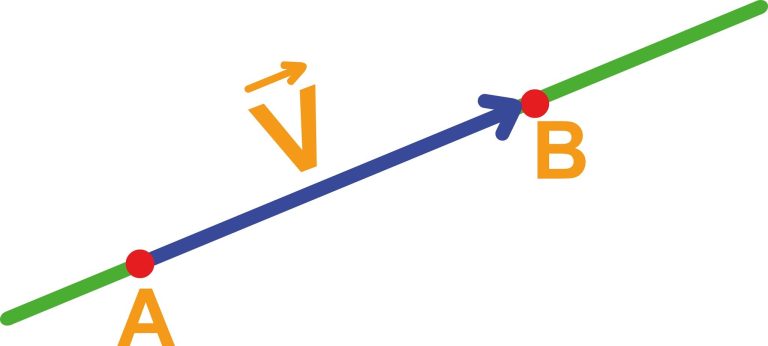
Introduction to Vectors and Scalars: Understanding the Basics Understanding the fundamental concepts of vectors and scalars is critical for diving into physics, engineering, and various fields of mathematics. At their core, they represent different types of quantities. Scalars are quantities that are described by a magnitude alone. Think about temperature, mass, or distance. For instance,…

Introduction to the Work-Energy Theorem The work-energy theorem is a cornerstone of classical mechanics. It establishes a profound relationship between the work done on an object and its kinetic energy. This principle is not just a formula; it’s a fundamental concept that reveals how energy is transferred and transformed in physical systems. At its core,…

Introduction to Momentum Conservation in Physics Momentum conservation is a fundamental concept in physics that plays a crucial role in understanding how objects interact during collisions. At its core, momentum is defined as the product of an object’s mass and its velocity. This means that the momentum of an object depends not only on how…

Introduction to Projectile Motion: Understanding the Basics Projectile motion refers to the motion of an object that is projected into the air and is subject to the forces of gravity and air resistance. This type of motion is a fascinating area of physics because it combines aspects of both linear and angular motion. Understanding projectile…

Introduction to Newton’s Laws of Motion Newton’s Laws of Motion are a trio of fundamental principles that form the backbone of classical mechanics. Sir Isaac Newton introduced these laws in the late 17th century, and they continue to be relevant in understanding how objects behave under various forces. Whether you’re launching a rocket, playing sports,…

Introduction to Acceleration in Physics Acceleration is a fundamental concept in physics that describes how an object’s velocity changes over time. It’s not just about speed; it encompasses both the rate of change of velocity and the direction of that change. When we think about acceleration, we often visualize cars speeding up on a highway,…
End of content
End of content