Unveiling the Genius: The Real-Life Story of Albert Einstein
Introduction to Albert Einstein’s Legacy
Albert Einstein’s legacy is more than just a collection of groundbreaking theories; it’s a testament to human curiosity and the relentless pursuit of knowledge. Born on March 14, 1879, in Ulm, Germany, he grew up in a world that was beginning to embrace modern science, yet he often felt like an outsider. His early education was tumultuous, with teachers at odds with his inquisitive nature. Despite these challenges, he emerged as one of the most influential physicists in history.
Einstein’s most notable contribution, the theory of relativity, fundamentally changed our understanding of time, space, and gravity. Prior to his work, scientists like Isaac Newton laid the groundwork for classical mechanics, but Einstein dared to challenge these ideas. His 1905 paper on special relativity introduced the concept that the laws of physics are the same for all non-accelerating observers and that the speed of light is constant, regardless of the observer’s motion. This radical departure from classical physics not only reshaped the scientific community but also altered the way we perceive our universe.
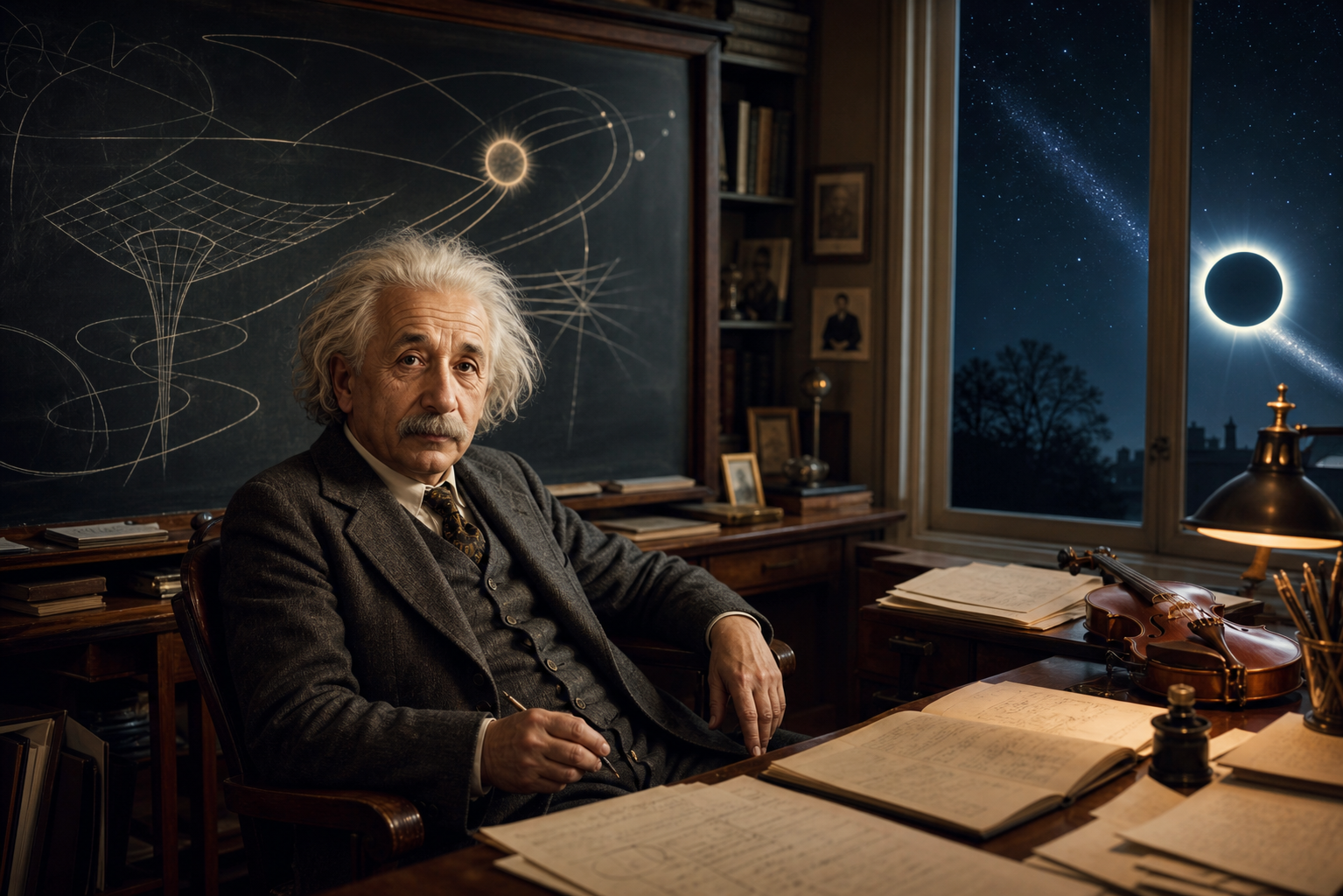
His later work on general relativity, published in 1915, expanded upon these ideas, introducing a new framework for understanding gravitational forces. In this theory, gravity is not merely a force but the curvature of spacetime caused by mass. This revelation was confirmed in 1919 when Arthur Eddington’s expedition to observe a solar eclipse validated Einstein’s predictions, catapulting him to worldwide fame. The phrase “Einstein was right” became a common refrain, signifying not just a scientific victory but a cultural one as well.
Einstein’s impact extends beyond physics. He became a symbol of intellectual achievement and a voice for humanitarian causes. He spoke out against war, advocated for civil rights, and supported the establishment of the Hebrew University in Jerusalem. His commitment to social justice and peace, coupled with his scientific genius, marked him as a multifaceted individual whose influence transcended the boundaries of academia.
Even decades after his death on April 18, 1955, Einstein’s theories continue to be a cornerstone of modern physics. His work laid the foundation for technologies like GPS and quantum computing. As we delve deeper into his life and accomplishments, we’ll uncover not just the genius behind the theories but the man who dared to think differently.
Early Life and Influences on Einstein
Albert Einstein was born on March 14, 1879, in Ulm, in the Kingdom of Württemberg in the German Empire. His family was Jewish, but they did not practice the religion devoutly. This cultural backdrop shaped Einstein’s early perceptions of the world. His father, Hermann Einstein, was a salesman and engineer, while his mother, Pauline Koch, was a homemaker. The family moved to Munich when Einstein was just an infant.
Growing up in Munich, Einstein showed signs of exceptional intelligence from a young age. His early education began at the Luitpold Gymnasium, where he struggled with the rigid schooling system. The authoritarian teaching style clashed with his inquisitive nature. Einstein often felt alienated, preferring to explore his interests outside the classroom.
At home, intellectual discussions filled the air. Young Albert was influenced by his father’s passion for science and technology. Hermann encouraged his son’s curiosity, introducing him to various scientific concepts and experiments. This early exposure to scientific thinking sparked a fire in Einstein that would burn throughout his life.
Another significant influence was Einstein’s love for music. His mother was an accomplished pianist, and she ensured that music was a prominent part of his upbringing. At the age of six, Albert began taking violin lessons, which developed his appreciation for the arts. Music would remain a lifelong passion and served as a creative outlet during challenging times in his career.
In 1894, the Einstein family faced financial struggles when Hermann’s business failed. They relocated to Pavia, Italy, leaving Albert behind to finish school. This separation marked a pivotal moment in his life. With the pressure of formal education lifted, Einstein experienced a surge of creativity. He began to explore his interests in physics and mathematics more freely.
During this time, Albert discovered the works of renowned scientists like Isaac Newton and James Clerk Maxwell. His attention turned to the mysteries of the universe, and he became particularly fascinated by light and its properties. This self-directed study laid the groundwork for his future theories, including the theory of relativity.
In 1896, at the age of 17, Einstein renounced his German citizenship and enrolled at the Polytechnic Institute in Zurich, Switzerland. Here, he found himself surrounded by like-minded individuals who shared his passion for science. This environment allowed him to flourish academically and socially, building connections that would prove important in his later career.
Throughout his early life, Einstein’s experiences shaped his worldview and ignited his passion for discovery. The blend of support from his family, the struggles within the education system, and his voracious appetite for knowledge would all converge to create the legendary physicist we know today.
Einstein’s Revolutionary Theories: Special and General Relativity
Special Relativity: The Birth of a New Physics
In 1905, Albert Einstein published his groundbreaking paper on special relativity, which fundamentally transformed our understanding of space and time. At its core, the theory asserts that the laws of physics are the same for all observers, regardless of their relative motion. This idea emerged from his contemplation of light’s behavior.
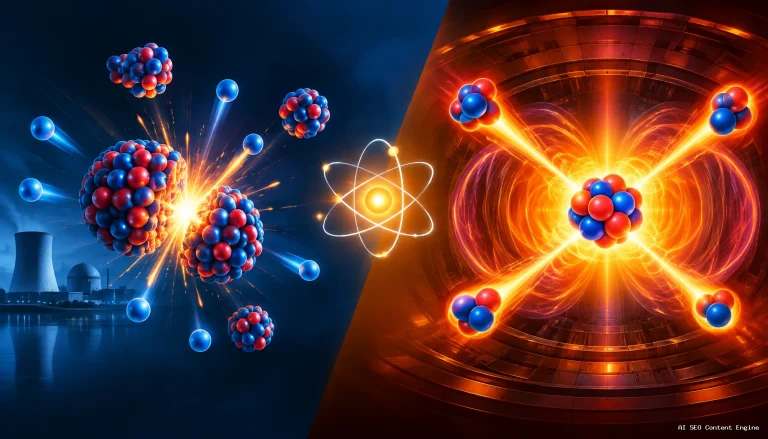
Einstein proposed that light travels at a constant speed, approximately 299,792 kilometers per second, in a vacuum. This led to the famous equation, E=mc², which reveals the equivalence of mass and energy. The implications are staggering. It means that a small amount of mass can be converted into a vast amount of energy, laying the groundwork for nuclear power and weapons.
Furthermore, special relativity introduced the concept that time is not an absolute measure. Instead, it’s relative and can be affected by speed. For example, as an object approaches the speed of light, time slows down for that object as observed from a stationary point. This phenomenon is known as time dilation. Real-world examples include precise measurements from atomic clocks on high-speed jets, which have shown that time indeed runs differently at high speeds.
General Relativity: Gravity Redefined
In 1915, Einstein expanded his theories with general relativity, which redefined gravity. Instead of viewing gravity as a force acting at a distance, he described it as a curvature of spacetime caused by mass. Imagine placing a heavy ball on a rubber sheet; the sheet bends under the weight, creating a dip. Other smaller objects rolling on the sheet will naturally move toward the heavier ball. This analogy captures how massive objects bend the fabric of spacetime, creating what we perceive as gravitational attraction.
General relativity predicted several phenomena, including the bending of light around massive objects, known as gravitational lensing. This was confirmed during a solar eclipse in 1919 when starlight passing near the sun was observed to bend. This observation catapulted Einstein to international fame.
Moreover, general relativity has practical applications today. GPS satellites must account for both special and general relativity to provide accurate positioning data. Without these adjustments, GPS would yield incorrect locations, sometimes off by several kilometers.
The Legacy of Relativity
Einstein’s theories challenged conventional wisdom and opened the door for modern physics. They have influenced countless fields, including astrophysics and cosmology. Concepts such as black holes and the expansion of the universe stem from the principles of relativity.
Understanding these theories is crucial not only for physicists but for anyone interested in the nature of reality. Einstein’s work reminds us that the universe is far more complex than it seems, urging us to question our perceptions and embrace the mysteries of the cosmos.
The Impact of World War I on Einstein’s Work
World War I had a profound effect on Albert Einstein’s work and his perception in the scientific community. The war, which lasted from 1914 to 1918, not only reshaped geopolitical landscapes but also influenced the intellectual climate in which Einstein operated. As tensions escalated in Europe, Einstein found himself torn between his pacifist beliefs and the realities of a world at war.
During the war, Einstein’s scientific focus shifted. He was deeply engaged in his work on general relativity, a theory that he had introduced in 1915. The war created an environment that allowed him to explore new ideas without the distractions of academic politics. However, it also meant that many of his contemporaries were preoccupied with nationalistic fervor and military commitments.
Einstein’s breakthrough came in 1915 when he published his field equations, which described how matter and energy influence the curvature of spacetime. The war, however, delayed the experimental verification of his theories. This was critical because, while his ideas were groundbreaking, they required empirical support to gain acceptance.
In 1919, the opportunity arose for validation. A total solar eclipse provided a perfect setting for testing Einstein’s predictions about light bending around massive objects. British astronomer Arthur Eddington led the expedition to observe the eclipse, capturing evidence that confirmed Einstein’s theories. The results were widely publicized, and Einstein became an international celebrity overnight.
The war had also changed the scientific landscape. Many German scientists faced discrimination and isolation due to the conflict. Einstein, a German Jew, found himself in a precarious position. He became a symbol of scientific integrity and internationalism. His opposition to militarism and nationalism garnered respect and admiration from many, but it also led to backlash from nationalist factions.
This period marked a turning point in Einstein’s life. The war not only shaped his scientific output but also influenced his political views. He became a vocal advocate for pacifism and disarmament, believing that science should unite people rather than divide them. The contrast between his humanitarian ideals and the destructive forces of the war deeply affected him.
In summary, World War I was a catalyst for Einstein’s scientific advancements and personal evolution. The conflict provided both challenges and opportunities, ultimately leading to the widespread acceptance of his theories. His experiences during this tumultuous time not only shaped his scientific legacy but also solidified his role as a public intellectual committed to peace and social justice.
Einstein’s Role in the Development of Quantum Mechanics
Albert Einstein’s relationship with quantum mechanics is a fascinating tale of conflict and contribution. While most remember him for his theory of relativity, his impact on quantum theory is equally significant. It’s important to highlight that Einstein was not a proponent of quantum mechanics as it was formulated in the early 20th century. Instead, he played a crucial role in laying the groundwork for its development.
In 1905, the same year he proposed the theory of special relativity, Einstein published a paper on the photoelectric effect. This phenomenon occurs when light shines on a material, causing it to emit electrons. Classical physics struggled to explain why light, despite its wave-like properties, could cause this effect. Einstein proposed that light consists of discrete packets of energy, which he called “quanta” or photons. This revolutionary idea earned him the Nobel Prize in Physics in 1921.
Einstein’s notion of light quanta challenged the classical wave theory of light. He suggested that the energy of these photons is proportional to their frequency, a concept that later became a cornerstone of quantum physics. This work not only advanced the understanding of the photoelectric effect but also prompted further exploration into the particle-like behavior of light.
Despite his contributions, Einstein remained skeptical of quantum mechanics as a complete theory. He famously disagreed with the idea of inherent randomness in quantum events, famously stating, “God does not play dice with the universe.” His debates with physicists like Niels Bohr at the Solvay Conferences became legendary. They highlighted a philosophical divide: Einstein favored determinism, while Bohr embraced the probabilistic nature of quantum mechanics.
Einstein’s continued engagement with quantum theory led to important developments. For instance, his work on Bose-Einstein statistics with Indian physicist Satyendra Nath Bose laid the foundation for understanding quantum gases. Today, Bose-Einstein condensates are a critical area of research in quantum physics.
In summary, Einstein’s contributions to quantum mechanics are multifaceted. He provided essential insights that helped shape the field, even while critiquing its interpretations. His legacy in quantum theory remains a testament to his role as both a pioneer and a challenger, pushing the boundaries of physics into new and often controversial territories.
Personal Life: Family, Relationships, and Challenges
Early Family Dynamics
Albert Einstein was born on March 14, 1879, in Ulm, Germany, into a middle-class Jewish family. His father, Hermann Einstein, was a salesman and engineer, while his mother, Pauline Koch, managed the household. The family’s dynamic was marked by a strong emphasis on education. Hermann encouraged Albert’s early interest in science and mathematics, nurturing his intellectual curiosity. However, the rigid schooling system in Germany clashed with Einstein’s innovative spirit. As a child, he often felt alienated from his peers and struggled with authority figures.
First Marriage: Mileva Marić
In 1903, Einstein married Mileva Marić, a fellow student from the Polytechnic Institute in Zurich. Their relationship was rooted in mutual admiration for science. Mileva, a talented physicist, contributed to Einstein’s early work, and the two shared a passion for intellectual pursuits. However, their marriage faced significant challenges. They had three children: Hans Albert, Eduard, and Lieserl, but the pressures of family life and Einstein’s burgeoning career took a toll on their relationship.
Their marriage deteriorated due to Einstein’s growing fame and the strain of raising their children. Mileva struggled with her own aspirations, feeling overshadowed by Einstein’s achievements. By 1914, their differences became irreconcilable, ultimately leading to their separation in 1914 and divorce in 1919. Despite the end of their marriage, Einstein remained supportive of Mileva, ensuring she received financial assistance.
Second Marriage: Elsa Einstein
In 1919, Albert married his cousin Elsa Löwenthal. This union brought a sense of stability to his life. Elsa was not only his partner but also played a crucial role in managing Einstein’s public image. She helped him navigate the complexities of fame, especially during his tours in the United States. Their relationship was characterized by a deep emotional connection, as both had faced personal challenges and family burdens.
However, Einstein’s fame brought its own set of challenges. He faced intense scrutiny and criticism, especially during the rise of anti-Semitism in Europe. Elsa stood by him during these tumultuous times, providing emotional support. They remained married until Elsa’s death in 1936, and Einstein often reflected on their years together with fondness.
Challenges and Personal Struggles
Throughout his life, Einstein faced numerous personal challenges. The pressures of fame often led to feelings of isolation. He grappled with the weight of his responsibilities as a public figure and the expectations placed upon him. Additionally, his relationship with his children was complex. His son Eduard struggled with mental health issues, which deeply affected Einstein. Despite this, he maintained a close bond with his children, often expressing his love and concern for their well-being.
Einstein’s personal life was not without its controversies. His relationships, particularly with women, sparked gossip and speculation. Yet, through it all, he remained committed to his work and family. His personal struggles enriched his understanding of humanity, often reflected in his scientific endeavors.
Einstein’s Political Activism and Humanitarian Efforts
Albert Einstein wasn’t just a brilliant physicist; he was also a passionate advocate for peace and social justice. His political activism began to take shape during World War I. Einstein, a pacifist at heart, opposed the war vehemently. He believed that militarism was detrimental to humanity and sought to promote peace.
After the war, in 1919, Einstein signed the “Manifesto to the Europeans,” calling for international cooperation and disarmament. This was a bold move, particularly in the volatile political climate of post-war Europe. He recognized the necessity for collective security and dialogue among nations to avoid future conflicts.
During the rise of the Nazi regime in Germany, Einstein became increasingly vocal against fascism and anti-Semitism. He was outspoken in his criticism of the Nazis, which ultimately forced him to flee Germany in 1933. Settling in the United States, he continued to use his platform to denounce oppression and advocate for civil rights.
Einstein’s correspondence with civil rights leaders like W.E.B. Du Bois and Paul Robeson highlights his commitment to racial equality. He often spoke at rallies and events, championing the cause of African Americans. In 1946, he stated, “Racism is a disease of white people,” showing his awareness of systemic injustices.
His activism extended to issues of nuclear disarmament following the bombings of Hiroshima and Nagasaki. Einstein, who had initially signed a letter to President Roosevelt urging the development of atomic weapons, later expressed deep regret. He became a strong advocate for nuclear disarmament and warned of the dangers of atomic warfare.
In 1955, shortly before his death, he signed the Russell-Einstein Manifesto promoting nuclear disarmament. He believed that the survival of humanity depended on the abolition of nuclear weapons and the establishment of global peace. Einstein’s humanitarian efforts didn’t stop at politics; he was also a staunch supporter of education and scientific collaboration across borders.
He was involved with the Emergency Committee of Atomic Scientists, which sought to educate the public about nuclear issues. His belief in the power of science to unite people was evident through his support for academic freedom and scientific inquiry. Einstein’s legacy, therefore, is not just one of scientific achievement; it’s also a testament to his enduring commitment to humanity.
Later Years: Einstein’s Contributions to Science and Society
Albert Einstein’s later years were marked by profound contributions that extended beyond the realm of theoretical physics. While he is best known for his groundbreaking theories, his work in the later stages of his life reflected a deepening commitment to social issues, pacifism, and the quest for global unity.
In 1921, Einstein received the Nobel Prize in Physics, not for his theory of relativity, but for his discovery of the photoelectric effect. This phenomenon, which demonstrated how light can eject electrons from a material, laid the groundwork for quantum theory. His Nobel-winning work highlighted the dual nature of light, behaving both as a wave and a particle. This was a significant step forward in understanding the complexities of quantum mechanics.
As the world plunged into turmoil during the 1930s, Einstein’s voice became increasingly influential. He spoke out against militarism and fascism, advocating for peace and human rights. In 1933, when Adolf Hitler came to power, Einstein, who was Jewish, fled Germany for the United States. Settling in Princeton, New Jersey, he took a position at the Institute for Advanced Study, where he continued his research into unified field theory, attempting to reconcile the forces of electromagnetism and gravity.
Einstein’s influence wasn’t limited to physics. He became an outspoken advocate for civil rights in America. He forged friendships with prominent African American civil rights leaders, including W.E.B. Du Bois and Paul Robeson. He publicly condemned racism and segregation, asserting that “racism is a disease of white people.” His activism extended to issues such as nuclear disarmament and the promotion of socialism, reflecting his belief in a more equitable world.
In 1939, Einstein signed a letter to President Franklin D. Roosevelt, warning of the potential for Nazi Germany to develop atomic weapons. This prompted the U.S. government to initiate the Manhattan Project, despite Einstein’s later regret about his involvement in nuclear weapon development. He argued for peaceful applications of physics and warned about the dangers of nuclear proliferation, positioning himself as a moral compass in a world increasingly threatened by technological advancements.
Einstein continued to engage with global issues until his death in 1955. He remained a passionate advocate for pacifism and international cooperation, believing that humanity’s survival hinged on collaborative efforts to address existential threats. His legacy is not just in scientific innovation, but also in his unwavering commitment to justice and humanity.
The Lasting Influence of Einstein’s Ideas
Einstein’s theories reshaped our understanding of the universe, leaving a legacy that permeates various fields of science and technology. His most famous equation, E=mc², isn’t just a formula; it’s a revelation. It illustrates the equivalence of mass and energy, laying the groundwork for nuclear physics. This relationship sparked the development of nuclear energy and weapons, altering geopolitical landscapes in the 20th century.
In physics, Einstein’s theories of relativity—both special and general—transformed our grasp of space, time, and gravity. Special relativity, introduced in 1905, challenged conventional notions of absolute time and space. It showed that time can dilate and lengths can contract depending on the observer’s speed. This wasn’t just theoretical. It has practical implications today, particularly in GPS technology, where satellites must account for time dilation effects to provide accurate positioning.
General relativity, published in 1915, provided a new understanding of gravity. Rather than being a force, gravity was redefined as the curvature of spacetime caused by mass. This concept challenged centuries of thought and prompted scientists to explore the universe differently. For instance, it paved the way for predicting black holes and gravitational waves. The recent detection of gravitational waves by LIGO in 2015 was a direct affirmation of Einstein’s predictions, showcasing the ongoing relevance of his work.
Beyond physics, Einstein’s influence stretches into philosophy and ethics. His thoughts on pacifism, civil rights, and the responsibilities of scientists resonate in today’s societal debates. Einstein was vocal about the ethical implications of scientific advancements, particularly in relation to nuclear weapons after World War II. His letters and public speeches urged scientists to consider the moral impact of their discoveries.
Moreover, Einstein’s work continues to inspire technological innovations. Quantum mechanics, which Einstein contributed to, underpins many modern technologies like semiconductors and lasers. Without his insights, there would be no smartphones or high-speed internet. This lasting influence highlights that Einstein wasn’t merely a physicist; he was a thinker whose ideas would ripple through time, shaping the very fabric of modern science and society.
Conclusion: Reflecting on Einstein’s Genius and Its Relevance Today
Albert Einstein wasn’t just a brilliant physicist; he was a revolutionary thinker whose ideas transformed our understanding of the universe. His theories, particularly the theory of relativity, shifted the paradigm of physics from Newtonian mechanics to a more complex understanding of time and space. This shift didn’t happen overnight. It took years of relentless questioning and exploration, showcasing Einstein’s unique ability to see beyond the conventional.
What makes Einstein’s genius particularly compelling is his approach to problem-solving. He didn’t just accept established norms; he challenged them. For instance, his thought experiments, like imagining riding alongside a beam of light, were not mere academic exercises. They were profound explorations that led to groundbreaking insights. This creativity in scientific thinking is a lesson for today’s innovators across all fields.
Einstein also understood the importance of collaboration. He engaged with other brilliant minds, exchanging ideas and debating concepts. His correspondence with contemporaries like Niels Bohr showcased his willingness to explore differing viewpoints. This collaborative spirit is crucial in today’s interconnected world, where complex problems often require diverse perspectives to solve.
In an era of rapid technological advancement, Einstein’s insights remain relevant. His warnings about the ethical implications of scientific discovery resonate today, especially in fields like artificial intelligence and genetic engineering. He believed that scientific knowledge should be guided by moral responsibility. As we push the boundaries of what’s possible, remembering this principle is vital.
Moreover, Einstein’s life story is a testament to resilience. He faced numerous challenges, from being expelled from school to fleeing persecution in Europe. Yet, he persevered, driven by his passion for knowledge and discovery. This resilience serves as an inspiration for anyone facing obstacles in their pursuit of excellence.
Ultimately, Einstein’s legacy is more than just scientific achievements. It embodies curiosity, creativity, and a commitment to humanity. As we reflect on his genius, we should strive to cultivate these qualities within ourselves. In doing so, we not only honor his memory but also create a future that continues to explore the boundaries of knowledge and understanding.