Understanding Centre of Mass: Definition, Formula, and Practical Examples
Ever wondered why a tightrope walker carries a long pole or how a gymnast maintains perfect balance on a beam? The secret lies in the fascinating concept known as the centre of mass. But what is centre of mass, and why is it so crucial in both everyday life and complex scientific calculations? This article dives into the heart of this essential physics concept, offering clear definitions, the fundamental formula, and practical examples to illuminate its importance. Whether you’re a student, an educator, or simply curious about the mechanics of balance and movement, understanding the centre of mass will transform your perspective on how objects interact with forces.
What is the Centre of Mass?
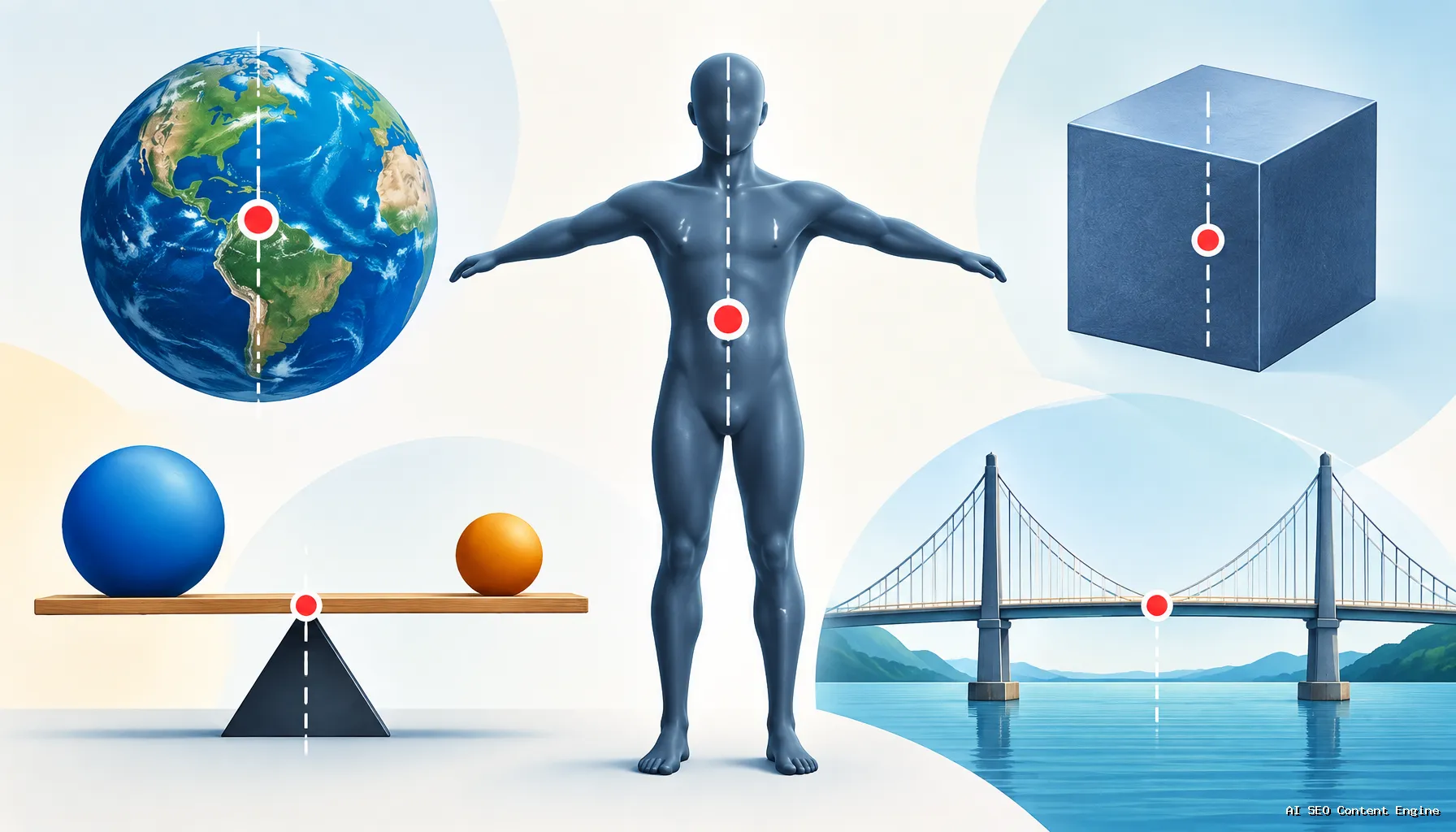
The centre of mass is a fundamental concept in physics that denotes the specific point in an object or system where the entire mass can be considered to be concentrated for the purposes of analysis. This concept is pivotal not only in theoretical physics but also in practical applications across various fields, including engineering, astronomy, and biomechanics.
In essence, the centre of mass provides a simplified way to analyze the motion of objects. It is the average location of all the mass in a body or system, weighted according to the mass of each constituent part. Imagine a seesaw perfectly balanced in the middle; this balance point is analogous to the centre of mass, where the moments on either side are equal.
Key Characteristics of Centre of Mass
- **Single Point Representation**: Regardless of the shape or distribution of mass within an object, the centre of mass represents the entire body’s mass at one point.
- **Independence from Gravitational Fields**: The centre of mass is a property of the distribution of mass within the object and is independent of gravity. This distinguishes it from the center of gravity, which varies with gravitational fields.
- **Equilibrium and Stability**: Understanding the centre of mass is crucial for analyzing equilibrium and stability in structures and mechanisms.
Centre of Mass in Physics
In the realm of centre of mass physics, this concept is used to simplify the equations of motion. For instance, in a complex system of interacting particles, calculating the motion of each individual particle can be overwhelmingly complex. Instead, the motion can be simplified by focusing on the centre of mass of the system.
Mathematical Representation
The centre of mass formula can be mathematically expressed for a system of particles as:
Rcm = (Σ miri) / (Σ mi)
where Rcm is the position vector of the centre of mass, mi is the mass of each particle, and ri is the position vector of each particle.
Real-World Examples of Centre of Mass
In practical terms, the concept of the centre of mass is applied in various real-world scenarios:
- **Sports**: Athletes leverage their centre of mass to achieve balance and control, such as gymnasts performing on a balance beam.
- **Engineering**: Engineers use the centre of mass to design stable structures and vehicles, ensuring that they can withstand various forces without toppling.
- **Astronomy**: The orbits of celestial bodies are often analyzed by considering the centre of mass of a star-planet system.
Understanding the centre of mass aids in distinguishing it from the center of gravity, especially in non-uniform gravitational fields, making it an indispensable tool in both academic and real-world applications.
Formula for Calculating Centre of Mass
The formula for calculating the centre of mass is fundamental in understanding how mass is distributed within an object or system. This calculation is crucial in the field of centre of mass physics, where precision and accuracy are paramount.
Basic Formula
The basic formula for the centre of mass in a system of particles is expressed as:
Rcm = (Σ miri) / (Σ mi)
- Rcm: The position vector of the centre of mass.
- mi: The mass of each particle in the system.
- ri: The position vector of each particle.
Extended Formula for Continuous Mass Distribution
In cases where the mass is distributed continuously rather than in discrete particles, the centre of mass formula can be adapted using integrals:
Rcm = (∫ r dm) / (∫ dm)
- This integral form considers the entire mass distribution over the object.
- The terms r and dm represent the position vector and the differential element of mass, respectively.
3D Coordinate System Application
When dealing with three-dimensional objects, the centre of mass can be determined by calculating the coordinates (xcm, ycm, zcm) individually:
- xcm = (Σ mixi) / (Σ mi)
- ycm = (Σ miyi) / (Σ mi)
- zcm = (Σ mizi) / (Σ mi)
Here, xi, yi, and zi denote the coordinates of each mass particle.
Center of Gravity vs Center of Mass
While often used interchangeably, it is vital to distinguish between center of gravity and center of mass. The center of gravity is the point where gravitational force can be considered to act, and it coincides with the centre of mass when the gravitational field is uniform. However, in non-uniform gravitational fields, these points may differ.
Understanding and applying the centre of mass formula accurately is essential in various fields, from engineering to astronomy, for analyzing stability and motion. By considering both discrete and continuous mass distributions, professionals can optimize designs and predict behaviors in real-world applications.
Worked Examples of Centre of Mass
To gain a practical understanding of the centre of mass, let’s explore some worked examples. These examples will illustrate how the centre of mass formula can be applied in various scenarios, reinforcing the concepts discussed earlier.
Example 1: Centre of Mass of a Simple Two-Particle System
Consider a system consisting of two particles. Particle A has a mass of 3 kg and is located at coordinate (2, 0), and Particle B has a mass of 5 kg at coordinate (4, 0). To find the centre of mass, use the following steps:
- Calculate the total mass:
Total mass, M = mA + mB = 3 kg + 5 kg = 8 kg - Apply the centre of mass formula for the x-coordinate:
xcm = (mAxA + mBxB) / M - Substitute the values:
xcm = (3 kg * 2 + 5 kg * 4) / 8 kg = (6 + 20) / 8 = 26 / 8 = 3.25 - Since both particles lie on the x-axis, ycm = 0.
So, the centre of mass of this two-particle system is located at (3.25, 0).
Example 2: Centre of Mass of a Uniform Rod
Imagine a uniform rod of length 10 meters and mass 10 kg. To find the centre of mass:
- Since the rod is uniform, its centre of mass is at its midpoint.
- Thus, the centre of mass is located at 5 meters from either end of the rod.
This example highlights the simplicity of finding the centre of mass in symmetrical and uniform objects.
Example 3: Centre of Mass of a Triangular Lamina
Consider a triangular lamina with vertices at (0, 0), (4, 0), and (0, 3). Assuming uniform density:
- Calculate the centroid (centre of mass for uniform bodies):
xcm = (x1 + x2 + x3) / 3 = (0 + 4 + 0) / 3 = 4 / 3 ≈ 1.33 - Similarly, calculate for y-coordinate:
ycm = (y1 + y2 + y3) / 3 = (0 + 0 + 3) / 3 = 3 / 3 = 1
The centre of mass of the triangular lamina is at (1.33, 1).
Conclusion
These examples demonstrate how the centre of mass formula is applied across different systems and shapes. By understanding these principles, one can analyze the balance and motion of objects in various fields, from centre of mass physics to engineering applications. These concepts are foundational in distinguishing between the center of gravity and the center of mass, particularly in non-uniform gravitational fields, where precision is critical.
Applications of Centre of Mass in Real-World Scenarios
The concept of the centre of mass plays a pivotal role in understanding and solving numerous real-world problems. It is a critical component in physics, engineering, and various other fields. By applying the centre of mass formula, professionals can enhance the stability, efficiency, and safety of systems ranging from simple everyday objects to complex machinery and structures.
Engineering and Architecture
- Structural Stability: In architecture, the centre of mass is crucial for ensuring the stability of buildings and bridges. Engineers calculate the centre of mass to design structures that can withstand forces such as wind and earthquakes, ensuring that the weight distribution does not compromise structural integrity.
- Vehicle Design: Automotive engineers use the centre of mass to optimize the stability and handling of vehicles. A lower centre of mass generally improves vehicle performance, reducing the risk of rollover and enhancing cornering ability.
Aerospace Applications
- Aircraft Balance: The centre of mass in aircraft is carefully managed to maintain balance and control during flight. This involves calculating the distribution of fuel, passengers, and cargo to ensure the aircraft remains within safe operational limits.
- Spacecraft Navigation: In space missions, the centre of mass affects how spacecraft maneuver and orient themselves. Precise calculations are essential for docking procedures and changing flight paths.
Sports and Human Motion
- Athletic Performance: Athletes often adjust their body position to alter their centre of mass, enhancing performance in sports like gymnastics, diving, and high jump. Understanding the centre of mass helps athletes achieve better balance and control.
- Biomechanics: In studying human motion, the centre of mass provides insights into movement efficiency and injury prevention. Biomechanists use these analyses to design better training programs and rehabilitation protocols.
Robotics and Automation
- Robot Stability: Designing robots with a well-calculated centre of mass ensures they can navigate environments without tipping over. This is particularly important in robots designed for uneven terrain or complex tasks.
- Manipulation and Grasping: The centre of mass is considered when robots handle objects, ensuring that they can lift and move items without losing balance or dropping them.
In conclusion, the centre of mass is a fundamental concept that extends beyond theoretical physics into practical applications. Whether in designing safer vehicles, constructing resilient buildings, or enhancing athletic performance, understanding the centre of mass is essential for optimizing balance and efficiency in a wide range of disciplines.
Centre of Mass vs Centre of Gravity
While the terms centre of mass and centre of gravity are often used interchangeably in everyday language, they represent distinct concepts in physics. Understanding the differences and similarities between these two points is crucial for various scientific and engineering applications.
Definition and Distinction
- Centre of Mass: This is a point representing the average position of all the mass in a body. It is purely a function of the mass distribution within the object and is not influenced by external factors such as gravity. The centre of mass formula is crucial in calculations involving dynamics and kinematics.
- Centre of Gravity: This is the point where the total weight of the body is considered to be concentrated. It can vary depending on the gravitational field in which the object is located. In a uniform gravitational field, the centre of gravity coincides with the centre of mass.
Importance in Physics
Both concepts are pivotal in the study of centre of mass physics and play significant roles in understanding how forces affect the motion of objects. Engineers and scientists often need to distinguish between the two to ensure accurate analyses in various fields.
Applications and Real-World Examples
In practical terms, the distinction between the centre of mass and centre of gravity is critical in several applications:
- Structural Engineering: Buildings and bridges are designed considering their centre of gravity to ensure stability, especially in seismic regions.
- Aerospace: Aircraft and spacecraft design involve precise calculations of both centres to maintain balance and control during flight.
- Sports Science: Athletes leverage the understanding of these concepts to improve performance in activities such as gymnastics and diving.
When Do They Differ?
The centre of mass and centre of gravity differ significantly when an object is in a non-uniform gravitational field, such as near a large mountain or in space. In such cases, the centre of gravity shifts towards the stronger gravitational pull, whereas the centre of mass remains unchanged.
In summary, while the center of gravity vs center of mass debate may seem academic, the distinction is crucial for precise scientific calculations and practical applications. By understanding how these points differ, engineers and scientists can better predict and manipulate the behavior of objects in various environments.
Centre of Mass in Different Coordinate Systems
The concept of the centre of mass is fundamental in physics and engineering, as it helps in understanding the motion and stability of objects. Calculating the centre of mass can vary significantly depending on the coordinate system used. The two primary coordinate systems employed in centre of mass calculations are the Cartesian coordinate system and the Polar coordinate system. Each system has its unique approach and applications, especially when dealing with complex shapes and mass distributions.
Cartesian Coordinate System
The Cartesian coordinate system is the most commonly used framework for calculating the centre of mass, particularly in three-dimensional space. In this system, the position of an object is defined by three coordinates (x, y, z), which represent its location along the X, Y, and Z axes.
- Formula in Cartesian Coordinates: The centre of mass (CM) in a Cartesian coordinate system is calculated using the formula:
- Xcm = (Σmixi) / Σmi
- Ycm = (Σmiyi) / Σmi
- Zcm = (Σmizi) / Σmi
- Applications: This system is highly effective for objects with uniform mass distribution and rectangular geometries, such as buildings and machinery components.
Polar Coordinate System
In cases where objects have circular or rotational symmetry, the polar coordinate system can simplify the process of finding the centre of mass. This system uses radial distance and angular coordinates (r, θ) to define the position of a point.
- Polar Coordinates Formula: The centre of mass in polar coordinates is given by:
- Rcm = (Σmiri) / Σmi
- θcm = (Σmiθi) / Σmi
- Applications: This system is particularly beneficial for analyzing systems like rotating disks, planetary orbits, and certain fluid dynamics problems.
Real-World Examples of Centre of Mass Calculations
Understanding how the centre of mass is calculated in different coordinate systems is crucial in numerous real-world applications:
- Robotics: Engineers design robots by calculating the centre of mass to ensure stability and balance during movement.
- Astronomy: Calculating the centre of mass of celestial bodies helps in understanding the dynamics of planetary systems.
- Structural Engineering: Calculating the centre of mass is essential in designing stable structures that can withstand external forces.
In conclusion, the choice of coordinate system for calculating the centre of mass depends largely on the object’s shape and the context of the problem. By leveraging the appropriate system, scientists and engineers can gain insights into the physical behavior of objects, enhancing the precision of their calculations and the effectiveness of their designs.
Conclusion
Understanding the center of mass is crucial in the realms of physics and engineering, providing a fundamental insight into the distribution of mass within an object or system. By comprehending how the center of mass affects movement and stability, one can predict the behavior of objects under various forces and conditions. Through the formulas and examples provided, you should now have a clearer grasp of how to calculate and apply the concept of the center of mass in practical scenarios. This knowledge not only enhances your theoretical understanding but also equips you with the tools needed to solve real-world problems effectively.
Frequently Asked Questions
What is the center of mass in simple terms?
The center of mass is the point in an object or system where the total mass can be considered to be concentrated. It is the average position of all the mass in a body and is the point that moves as if all external forces act at this point.
How do you find the center of mass?
To find the center of mass, you can use the formula: Center of Mass (CM) = (Σmi * xi) / Σmi, where mi represents the mass of each particle and xi represents the position of each particle. In a continuous mass distribution, integration is used instead of summation.
Why is center of mass important?
The center of mass is important because it simplifies the analysis of mechanical systems, allowing us to predict the motion of objects. It is crucial in understanding balance, stability, and motion in various applications ranging from simple objects to complex systems like rockets and satellites.
Can the center of mass be outside the object?
Yes, the center of mass can be outside the object. This occurs in cases where the object has an irregular shape or distribution of mass. For example, in a ring or a hollow sphere, the center of mass is located at the geometric center, which is in empty space.
How is center of mass used in physics?
In physics, the center of mass is used to simplify the study of motion. By considering the center of mass, complex systems can be reduced to a single point to analyze translational motion. It is essential in mechanics, orbital dynamics, and many fields where the motion of bodies is analyzed.