Understanding Archimedes’ Principle and Its Role in Buoyancy
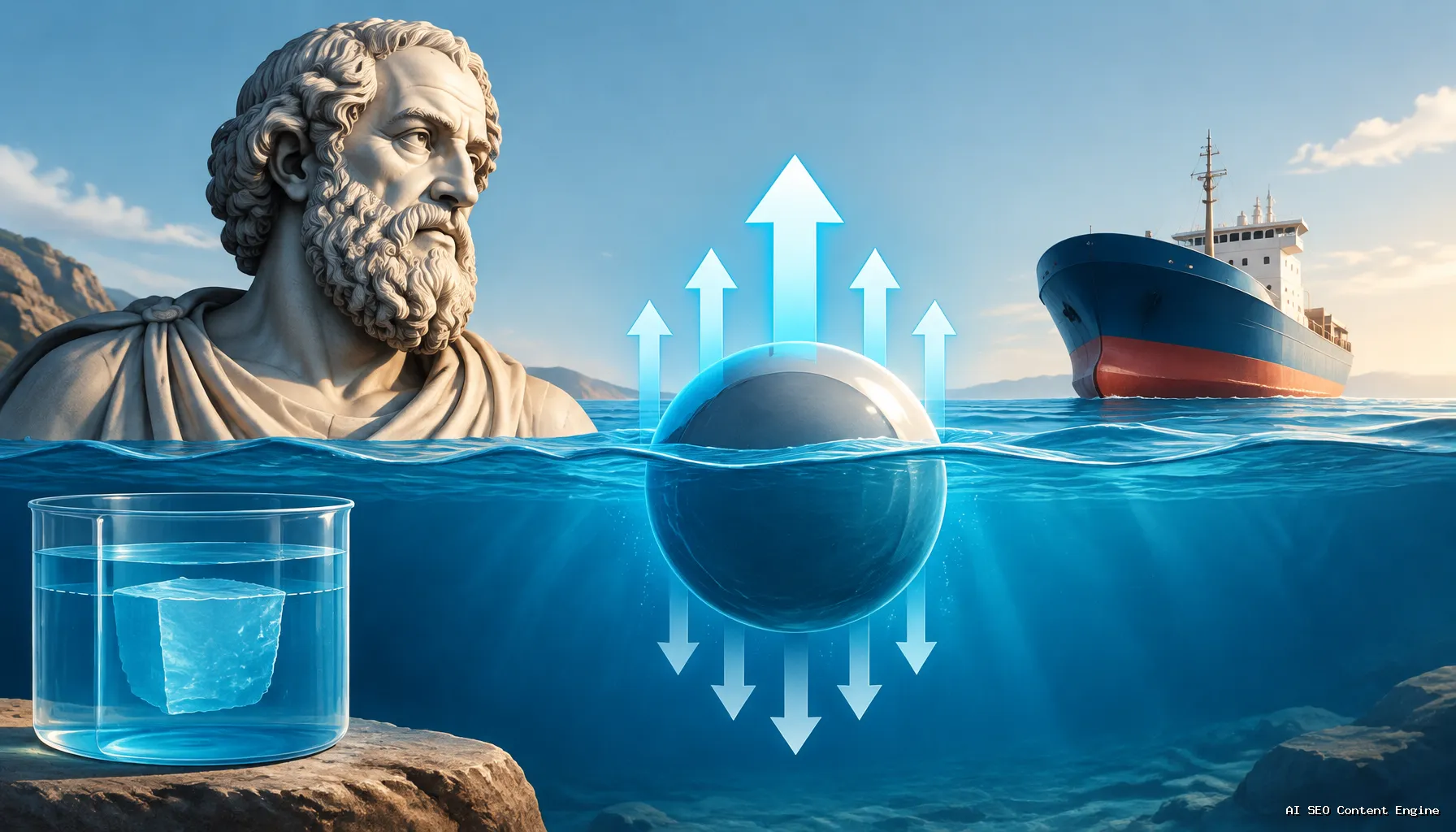
Have you ever wondered why massive ships float effortlessly on water while a small stone sinks to the bottom? The answer lies in the fascinating world of physics, particularly in understanding Archimedes’ Principle and its crucial role in buoyancy. The principle, succinctly represented by the formula F = ρVg, helps explain why objects behave differently in fluids. Archimedes’ discovery was a groundbreaking moment in science, revealing that the buoyant force on an object submerged in a fluid is equal to the weight of the fluid displaced by the object. This concept is not only fundamental in physics but also essential for various practical applications, from designing ships to understanding the behavior of balloons in the air.
To dive deeper into how this principle operates and its implications, it’s valuable to explore some authoritative resources. For a detailed historical and scientific overview, you can visit this comprehensive entry on Archimedes’ Principle on Wikipedia. Additionally, if you’re eager to learn more about other intriguing topics and explore further scientific concepts, feel free to visit our home page.
The Legacy of Archimedes and His Principle
Archimedes’ contributions to science and mathematics extend far beyond his famous principle of buoyancy, yet it’s this principle that has left an indelible mark on the world. The discovery, which elegantly explains the behavior of objects in fluid environments, has become a cornerstone of fluid mechanics, influencing not only scientific thought but also practical applications in engineering and design.
A Timeless Contribution to Science
The insight that the buoyant force exerted on an object immersed in a fluid is equal to the weight of the fluid displaced was revolutionary. This principle provided a clearer understanding of why certain objects float while others sink, transforming how humans interacted with their environment. From ancient times to modern-day physics, this understanding plays a crucial role in the development of various technologies and methods.
- Shipbuilding and Marine Engineering: The principle is fundamental in designing vessels that can carry massive loads without sinking, as it allows engineers to calculate the exact buoyancy needed to keep ships afloat.
- Aeronautics: The science of buoyancy isn’t limited to water. It is also essential in understanding how balloons and airships can float in the air, highlighting the principle’s versatility across different mediums.
- Hydraulic Systems: The knowledge of fluid displacement and pressure is key in designing efficient hydraulic systems used in various machinery and industrial processes.
Archimedes’ Influence in Modern Education
Beyond practical applications, Archimedes’ work serves as an educational pillar in physics curricula worldwide. His principle is introduced early in academic settings as a fundamental physics concept, nurturing the analytical skills of budding scientists and engineers. This foundational knowledge continues to inspire curiosity and innovation among students, nurturing the next generation of thinkers and inventors.
For those interested in exploring more about how Archimedes’ insights have shaped our understanding of the physical world, consider delving into related topics such as fluid mechanics. Understanding these principles not only enriches one’s appreciation of historical scientific advancements but also equips individuals with the knowledge to address contemporary challenges in engineering and technology.
The legacy of Archimedes and his principle remains as relevant today as it was over two millennia ago, proving the timeless value of scientific discovery and the enduring quest for knowledge.
Explaining the Concept of Buoyancy
Buoyancy is a fascinating phenomenon in physics that describes the ability of an object to float in a fluid. At its core, buoyancy is the result of the upward force exerted by the fluid on the object submerged in it. This force, known as the buoyant force, plays a crucial role in determining whether an object will sink or float.
The Buoyant Force
The buoyant force is directly related to the volume of fluid displaced by the object. When an object is placed in a fluid, it pushes the fluid out of the way, creating a displacement. According to Archimedes’ Principle, the buoyant force acting on the object is equal to the weight of the fluid displaced. This relationship can be expressed mathematically as:
F = ρVg
- F is the buoyant force.
- ρ (rho) is the density of the fluid.
- V is the volume of the fluid displaced.
- g is the acceleration due to gravity.
Understanding Water Displacement
Water displacement is a key concept in understanding buoyancy. When an object is submerged in water, it displaces a volume of water equal to the volume of the object below the surface. For instance, if a solid cube is completely submerged, the volume of the displaced water is equal to the cube’s volume. The weight of this displaced water determines the magnitude of the buoyant force.
Why Objects Float or Sink
Whether an object floats or sinks depends on the relationship between the buoyant force and the object’s weight:
- If the buoyant force is greater than the object’s weight, the object will rise to the surface and float.
- If the buoyant force is equal to the object’s weight, the object remains suspended within the fluid.
- If the buoyant force is less than the object’s weight, the object will sink.
Understanding these principles not only provides insights into why some objects float while others sink but also has practical applications in fields such as fluid mechanics and engineering.
In summary, buoyancy is a fundamental concept that illustrates the intricate interplay between fluid dynamics and object properties. By exploring how the buoyant force affects floating objects, one gains a deeper appreciation of the elegant simplicity and profound implications of this principle in the natural world.
How the Formula F = ρVg Describes Buoyant Force
The formula F = ρVg is central to understanding buoyancy and why objects behave differently in fluids. Here, we break down each component of the equation to illustrate how it describes the buoyant force:
Components of the Formula
- F (Buoyant Force): The upward force exerted by a fluid that opposes the weight of an immersed object. This force is what makes objects float or rise to the surface.
- ρ (Density of the Fluid): This represents the mass per unit volume of the fluid in which the object is submerged. Denser fluids exert a greater buoyant force.
- V (Volume of Displaced Fluid): The volume of fluid displaced by the object, which is equivalent to the volume of the submerged portion of the object. Larger displaced volumes lead to stronger buoyant forces.
- g (Acceleration Due to Gravity): A constant that represents the gravitational pull on the object, typically measured as 9.81 m/s² on Earth.
Explaining the Relationship
By examining the equation, we understand that the buoyant force is directly proportional to the density of the fluid, the volume of fluid displaced, and the acceleration due to gravity. This relationship explains several key observations:
- **Floating Objects:** When an object floats, the buoyant force equals the object’s weight. This equilibrium allows objects like boats to stay afloat.
- **Sinking Objects:** If an object’s density is greater than that of the fluid, it displaces less fluid volume, resulting in a buoyant force smaller than its weight, causing it to sink.
- **Neutral Buoyancy:** Objects with a density equal to that of the fluid achieve neutral buoyancy, staying suspended at a constant depth within the fluid.
Applications in Fluid Mechanics
The formula F = ρVg is not just a theoretical construct but has practical implications across various fields, including fluid mechanics and engineering. Understanding how buoyant forces operate can aid in designing ships, submarines, and even specific industrial processes involving fluid dynamics.
Incorporating these concepts into practical applications highlights the significance of buoyancy in both natural phenomena and technological advancements, reinforcing the enduring relevance of Archimedes’ discoveries.
Practical Applications of Archimedes’ Principle
Archimedes’ Principle, a fundamental concept in fluid mechanics, is integral to numerous practical applications in both everyday life and advanced technology. Its influence can be seen across various fields, from maritime navigation to medical devices, demonstrating its versatility and importance.
Maritime Engineering
One of the most visible applications of Archimedes’ Principle is in the design and operation of ships and submarines. By understanding buoyancy, engineers can calculate the load a vessel can carry without sinking. This principle ensures that ships are designed with the appropriate hull shape to displace enough water to support their weight, allowing them to float efficiently on the water’s surface.
- Shipbuilding: The principle is crucial in determining the displacement needed for ships to remain buoyant. It helps in calculating the draft and stability of the vessel, ensuring safe and efficient operation.
- Submarines: Submarines use Archimedes’ Principle to dive and surface. By adjusting the volume of water in their ballast tanks, they can change their overall density, allowing them to sink or rise as needed.
Hydrometers and Density Measurement
Archimedes’ Principle is also applied in the design of hydrometers, instruments used to measure the density or specific gravity of liquids. A hydrometer floats in the liquid, and the level to which it sinks correlates with the liquid’s density. This is particularly useful in industries such as brewing, winemaking, and chemical production, where precise fluid measurements are essential.
Medical Applications
In the medical field, Archimedes’ Principle assists in designing equipment such as the hydrodensitometry test, commonly known as underwater weighing. This method helps determine body composition by using water displacement to measure body density, providing a high level of accuracy in assessing body fat percentage.
Recreational and Safety Equipment
The principle is also employed in the development of recreational and safety equipment, such as life vests and floating devices. These items are designed to ensure that the buoyant force acting on them exceeds the weight of the person or object using them, thus keeping them afloat in water.
In conclusion, Archimedes’ Principle is a cornerstone of fluid mechanics, with applications that span a wide range of disciplines. Its role in understanding buoyant forces and water displacement not only enhances our comprehension of fundamental physics principles but also drives innovation and safety in numerous industries.
Common Misunderstandings About Buoyancy
Despite the fundamental nature of buoyancy in physics, several misconceptions often arise. These misunderstandings can lead to confusion, especially when attempting to apply buoyancy concepts to real-world situations. Below, we clarify some common myths and errors associated with buoyancy.
Misconception 1: Heavier Objects Always Sink
One of the most prevalent misunderstandings is the belief that heavier objects will inevitably sink. In reality, whether an object sinks or floats depends not on its weight alone but on its density relative to the fluid it is placed in. An object will float if it is less dense than the fluid. This principle explains why massive steel ships can float—they are designed with hulls that displace a significant volume of water, reducing their overall density.
Misconception 2: Buoyant Force Depends Solely on the Object’s Volume
Another common error is assuming that the buoyant force is determined only by the volume of the object. While the volume submerged indeed affects the buoyant force, it is equally crucial to consider the density of the fluid. The buoyant force is a product of the fluid’s density, the volume of displaced fluid, and gravitational acceleration, as described by the equation F = ρVg.
Misconception 3: Floating Objects Do Not Displace Water
Some people mistakenly believe that floating objects do not displace water. In truth, every floating object displaces a volume of water equal to its weight. This is why ships sink deeper into the water as they are loaded with cargo, displacing more fluid to balance the additional weight.
Misconception 4: Buoyancy Is Not Affected by Fluid Type
Buoyancy is often thought to be independent of the type of fluid. However, the density of the fluid plays a critical role in determining buoyancy. For example, an object may float in saltwater but sink in freshwater due to the higher density of saltwater, which provides a greater buoyant force.
Understanding these common misconceptions can enhance one’s grasp of fluid mechanics and buoyancy principles.
Archimedes’ Principle in Everyday Life
Archimedes’ Principle is not just a concept confined to textbooks; it plays a pivotal role in numerous aspects of daily life, influencing various activities and technologies. Understanding how this principle operates can provide valuable insights into the world around us.
Floating Vessels
One of the most direct applications of Archimedes’ Principle is in the design and operation of ships and boats. These vessels are engineered to float by displacing water equal to their weight. This concept allows for the transport of heavy loads over water, as the buoyant force counteracts the weight, ensuring the vessel remains afloat.
Submarines
Submarines utilize Archimedes’ Principle to dive and surface. By adjusting the amount of water in their ballast tanks, submarines change their overall density. Filling the tanks with water increases density, allowing the submarine to sink. Conversely, expelling water decreases density, enabling it to rise.
Hot Air Balloons
While seemingly unrelated, hot air balloons also rely on the principles of buoyancy. By heating the air inside the balloon, its density decreases compared to the cooler, denser air outside, creating an upward buoyant force that allows it to ascend.
Hydrometers
In laboratories and industries, hydrometers are used to measure the density of liquids. Based on Archimedes’ Principle, a hydrometer floats higher or lower depending on the liquid’s density. This simple yet effective tool helps in determining fluid characteristics in various applications, from brewing to battery maintenance.
Swimming and Diving
Whether you’re swimming in a pool or diving into the ocean, Archimedes’ Principle is at play. Swimmers experience buoyancy, which makes it easier to float and move through water. Understanding buoyancy can enhance techniques in swimming and improve safety in water sports.
By recognizing these everyday applications, one can see how fundamental principles of physics, like Archimedes’ Principle, are integral to both simple and complex activities. Through this understanding, we can appreciate the intricacies of our environment and the technology we use.
Conclusion
Understanding Archimedes’ Principle and buoyancy is fundamental to comprehending how objects interact with fluids. This principle, encapsulated by the formula F = ρVg, not only clarifies why objects float or sink but also underpins crucial technological advancements in marine engineering, fluid mechanics, and beyond. The insights provided by Archimedes centuries ago continue to be pivotal in modern science and engineering, showcasing the timeless nature of his discoveries. As we unravel the complexities of buoyancy, it becomes evident that this principle is more than just a scientific concept; it is a testament to human curiosity and the relentless pursuit of knowledge.
Frequently Asked Questions
What is Archimedes’ principle derivation?
Archimedes’ principle is derived from the observation that the buoyant force experienced by an object submerged in a fluid is equal to the weight of the fluid displaced by the object. Mathematically, this can be expressed as F = ρVg, where F is the buoyant force, ρ (rho) is the fluid density, V is the volume of fluid displaced, and g is the acceleration due to gravity. This principle is derived by considering the equilibrium of forces acting on the submerged object.
What are the applications of buoyancy?
Buoyancy has numerous applications across various fields. In marine engineering, it is crucial for designing ships and submarines to ensure they float and remain stable. In medicine, buoyancy principles are used in designing flotation devices for physical therapy and rehabilitation. Additionally, buoyancy is essential in geosciences for understanding the behavior of magma in volcanic activity and in meteorology for studying atmospheric phenomena.
What is buoyancy for class 8?
For class 8 students, buoyancy can be understood as the upward force that a fluid exerts on an object placed in it. This force makes objects feel lighter in water and is the reason why some objects float while others sink. Buoyancy depends on the object’s density compared to the fluid’s density. If an object is less dense than the fluid, it will float; if more dense, it will sink.
What did Archimedes say about buoyancy?
Archimedes famously stated that any object, wholly or partially immersed in a fluid, experiences a buoyant force equal to the weight of the fluid displaced by the object. This principle, known as Archimedes’ Principle, explains why objects float or sink and is a fundamental concept in fluid mechanics. Archimedes’ discovery laid the groundwork for further exploration into fluid dynamics and buoyancy.