
Mastering Net Force: An Easy Guide to Free Body Diagrams and Newton’s Second Law
Understanding the forces that govern motion in our world might seem daunting, but mastering the concept of net force is simpler than you think. Whether you’re a student or just someone curious about physics, grasping how to find net force using free body diagrams and Newton’s Second Law is essential. This guide will break down these concepts into easy-to-understand parts, empowering you to tackle physics problems with confidence. By exploring the forces acting on an object and how they combine, you’ll gain a practical understanding of motion dynamics.
Free body diagrams are a pivotal tool in visualizing these forces, and when combined with Newton’s Second Law, they offer a powerful method to calculate net force. According to Newton’s laws of motion, the relationship between an object’s mass, its acceleration, and the applied force is fundamental. If you’re eager to delve deeper into these principles, this guide will serve as your roadmap.
For more on the basics of physics and to explore other fascinating topics, feel free to browse our educational resources and enhance your learning journey.
Understanding the Basics of Force and Motion
To effectively analyze the dynamics of motion, it’s crucial to first understand the fundamental concepts of force and motion. At its core, force is simply a push or pull exerted on an object, and it can cause the object to start moving, stop, or change direction. These interactions are the essence of many physics problems and are best visualized using tools like free body diagrams.
What is a Force?
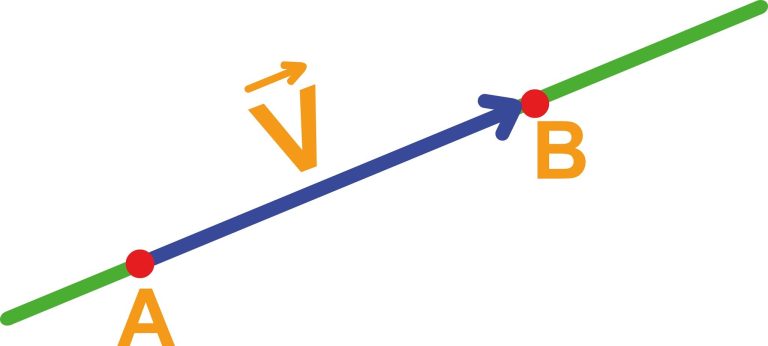
Force is a vector quantity, meaning it has both magnitude and direction. It is measured in newtons (N) and can arise from various interactions, such as gravitational, electromagnetic, or mechanical forces. Understanding the different types of forces helps in identifying how they influence motion:
- Gravitational Force: The force of attraction between two masses, such as the Earth and objects on it.
- Normal Force: The support force exerted upon an object in contact with another stable object.
- Frictional Force: The force resisting the relative motion of solid surfaces, fluid layers, and material elements sliding against each other.
- Applied Force: Any force that is applied to an object by a person or another object.
- Tension Force: The force transmitted through a string, rope, cable, or wire when it is pulled tight by forces acting from opposite ends.
The Role of Motion in Physics
Motion refers to the change in position of an object over time. The relationship between force and motion is intricately described by Newton’s laws of motion. The first law, often called the law of inertia, states that an object at rest will stay at rest, and an object in motion will stay in motion unless acted upon by a net external force. This principle highlights the necessity of force to initiate or change motion.
Visualizing Forces with Free Body Diagrams
Free body diagrams are essential tools in physics that help visualize and solve for the forces acting on an object. These diagrams represent the object as a dot or a simple shape and use arrows to indicate the direction and magnitude of all the forces involved. By isolating these forces, one can easily apply Newton’s Second Law to find the net force acting on the object.
For those looking to deepen their understanding or tackle more complex problems, exploring resources like thermal expansion can provide additional insights into how forces influence different physical phenomena.
With a solid grasp of these basics, you’re well-equipped to move forward and explore how to calculate net force using free body diagrams and Newton’s Second Law. This foundational knowledge will also serve as a stepping stone to more advanced topics in physics.
What is a Free Body Diagram and How is it Used?
A free body diagram is a simplified representation of an object and the forces acting upon it. It is a crucial tool in physics, allowing students and professionals alike to visualize forces, making it easier to understand and solve complex problems. By breaking down the forces acting on an object, a free body diagram helps in identifying not only the magnitude but also the direction of each force, enabling a clearer application of Newton’s Second Law.
Components of a Free Body Diagram
- Object Representation: Typically, the object is represented as a dot or a simple geometric shape. This abstraction helps focus on the forces rather than the object’s physical details.
- Force Arrows: Arrows are used to depict forces acting on the object. The length of each arrow indicates the force’s magnitude, while the direction shows the direction in which the force is acting.
- Labels: Each force is labeled with a symbol, such as Fg for gravitational force or Ft for tension, to identify the type of force.
How to Use Free Body Diagrams
To effectively use a free body diagram, follow these steps:
- Identify the Object: Choose the object you want to analyze. This could be anything from a block on a slope to a car on a highway.
- Isolate the Object: Imagine the object is isolated from its surroundings. This step helps in focusing solely on the object and the forces acting upon it.
- Draw the Diagram: Represent the object as a point or a simple shape, and draw arrows for all forces. Ensure each force arrow is proportional to its magnitude.
- Label Forces: Clearly label each force according to its type. Common forces include gravitational, normal, tension, and frictional forces.
- Apply Newton’s Second Law: Use the diagram to set up equations based on Newton’s Second Law, F = ma, to solve for unknowns such as net force or acceleration.
Free body diagrams are not just limited to basic physics problems. They find applications in various fields, from engineering to biomechanics, where understanding the interplay of forces is essential. For instance, when dealing with a spring system or analyzing forces in a bridge structure, these diagrams provide a clear framework to predict system behavior.
Whether you are preparing for an exam or solving real-world physics problems, mastering free body diagrams is a fundamental skill. They serve as a stepping stone to more complex analyses, helping you explore advanced topics such as rotational dynamics and thermodynamics, linking to broader concepts such as those found in nuclear physics.
Step-by-Step Guide to Finding Net Force
Determining the net force acting on an object is a fundamental skill in physics, crucial for solving a wide array of problems from simple classroom exercises to complex engineering applications. Here’s a detailed step-by-step guide to help you master this essential technique:
1. Identify All Forces Acting on the Object
Begin by thoroughly analyzing the situation to identify every force acting on the object. These can include:
- Gravitational Force: Often referred to as weight, it’s calculated as the product of mass and gravitational acceleration (mg).
- Normal Force: The support force exerted by a surface perpendicular to the object.
- Tension Force: The pulling force transmitted through a string, rope, or cable.
- Frictional Force: The force opposing motion between surfaces in contact.
2. Draw a Free Body Diagram
Create a free body diagram to visually represent the forces identified. This diagram allows you to clearly see how forces interact. Ensure each force is represented as an arrow with the tail on the object and the arrow pointing in the direction of the force. The length of the arrow should be proportional to the force’s magnitude.
3. Choose a Coordinate System
Select a coordinate system that simplifies the problem. In many cases, aligning one axis with the direction of acceleration or a significant force can make calculations more straightforward.
4. Resolve Forces into Components
If forces are not aligned with your chosen coordinate system, resolve them into perpendicular components. Typically, this involves breaking forces into horizontal and vertical components using trigonometric functions.
5. Apply Newton’s Second Law
Using the equation F = ma, set up equations for each direction. For example, in the horizontal direction, the sum of the forces equals the mass times the acceleration in that direction. Repeat for the vertical direction if necessary.
6. Solve for the Net Force
Combine the force components to find the net force in each direction. Use vector addition to determine the resultant net force. This is the vector sum of all individual forces acting on the object.
7. Calculate Magnitude and Direction
Once you have the net force components, calculate the magnitude of the net force using the Pythagorean theorem. Determine its direction using inverse trigonometric functions.
By following these steps, you’ll be well-equipped to tackle a variety of physics problems, whether you’re dealing with objects on inclined planes, analyzing forces in springs, or solving complex mechanics questions. Understanding how forces interact and affect motion is a powerful tool in both academic and practical applications.
For those interested in exploring related physics concepts, consider reading our article on nuclear fission and fusion, which dives into the interplay of forces at the atomic level.
Newton’s Second Law Explained Simply
Newton’s Second Law of Motion forms a cornerstone of classical mechanics, offering a clear explanation of how forces affect the motion of objects. At its core, this law reveals the relationship between the force applied to an object, its mass, and the acceleration it experiences. Simply put, the law is often expressed by the equation:
F = ma
Where:
- F represents the net force acting on the object (measured in newtons).
- m is the mass of the object (measured in kilograms).
- a denotes the acceleration of the object (measured in meters per second squared).
Understanding the Equation
This elegant equation tells us that the acceleration of an object is directly proportional to the net force acting upon it and inversely proportional to its mass. Essentially, a larger force will result in greater acceleration, while a heavier object will require more force to achieve the same acceleration. This principle is crucial when analyzing motion through force diagrams or free-body diagrams.
Practical Implications in Physics
Newton’s Second Law is instrumental in solving a wide range of physics problems. Whether you’re analyzing how a car accelerates on a road, understanding the forces at play in a spring system, or tackling complex atomic interactions, this law provides the foundation for determining the effects of forces.
When working with free-body diagrams, you’ll often break down forces into components and use Newton’s Second Law to solve for unknown quantities. This approach is particularly useful when dealing with inclined planes or systems involving multiple forces. By understanding and applying this law, you can accurately predict how an object will move under the influence of various forces, a skill essential in both academic studies and real-world applications.
Key Concepts to Remember
- Net Force: The sum of all forces acting on an object. It determines the object’s acceleration.
- Mass: The amount of matter in the object, affecting how much force is needed for a given acceleration.
- Acceleration: The rate of change of velocity, directly linked to the net force and inversely linked to mass.
By grasping these concepts, you can effectively navigate and solve diverse physics problems, enhancing your understanding of the physical world.
Common Misconceptions About Force and Motion
Understanding the basics of force and motion is crucial for solving physics problems effectively. However, several misconceptions can lead to confusion and errors. Below, we address some of the most common misunderstandings to help clarify these fundamental concepts.
Misconception 1: Heavier Objects Fall Faster
One prevalent misconception is that heavier objects fall faster than lighter ones. While it may seem intuitive, this is not the case in a vacuum where all objects fall at the same rate due to gravity, as demonstrated by Galileo’s experiments. Air resistance can create differences in fall rates, but fundamentally, mass does not affect gravitational acceleration.
Misconception 2: Constant Force is Needed to Keep an Object Moving
Another frequent misunderstanding is that a continuous force is required to maintain motion. In reality, according to Newton’s First Law, an object in motion stays in motion at constant velocity unless acted upon by an external force. Friction is often the force that needs to be overcome, not the intrinsic requirement for maintaining motion.
Misconception 3: Force Equals Mass
Some students mistakenly believe that force and mass are synonymous. Although related, force is not equivalent to mass. Instead, force is the product of mass and acceleration (F = ma), a principle central to Newton’s Second Law. Understanding this distinction is vital when analyzing free body diagrams and calculating net forces.
Misconception 4: Free Body Diagrams are Only for Complex Systems
Free body diagrams are often thought to be necessary only for intricate systems or multi-force interactions. However, they are a valuable tool even for simple systems, offering a visual representation that aids in understanding force interactions. Utilizing these diagrams can simplify solving problems by breaking down forces into comprehensible components.
Misconception 5: Net Force is Always in the Direction of Motion
While it might seem logical to assume that net force always aligns with the direction of motion, this isn’t always true. Net force indicates the direction of acceleration, which may differ from an object’s current motion. For instance, an object slowing down due to friction or another opposing force has a net force acting opposite to its direction of motion.
Addressing these misconceptions can greatly enhance your understanding of physics and improve problem-solving skills. For those interested in further exploring related concepts, check out our article on Nuclear Fission vs Fusion to see how energy concepts are applied in other scientific contexts.
Practical Applications of Net Force and Free Body Diagrams
Understanding net force and how to effectively use free body diagrams is crucial for both students and professionals dealing with physics, engineering, and various applied sciences. These tools offer practical applications that extend into numerous fields, providing clarity and precision in problem-solving.
Design and Engineering
In engineering, free body diagrams are indispensable when designing structures like bridges, buildings, and vehicles. Engineers use these diagrams to visualize the forces acting on each component, ensuring that the design can withstand the expected loads and stresses. By applying net force calculations, they can predict how structures will respond under different conditions, optimizing for safety and efficiency.
Automotive Industry
The automotive sector frequently utilizes force diagrams to enhance performance and safety. For instance, understanding the forces acting on a car during acceleration, braking, and cornering helps engineers design better suspension systems and improve the overall handling of vehicles. Free body diagrams assist in visualizing these forces, leading to innovations in design and technology.
Aerospace Applications
In aerospace, accurately determining net forces is critical for flight dynamics. Free body diagrams aid in the analysis of forces such as lift, drag, thrust, and gravitational pull acting on aircraft and spacecraft. This understanding is vital for developing flight control systems and ensuring stability during flight.
Educational Tools
For educators and students, free body diagrams are essential for learning and teaching physics concepts. They offer a visual method to solve complex problems and understand the principles of Newton’s laws of motion. Many educational resources, such as problem sets and guides, incorporate these diagrams to facilitate comprehension.
Robotics and Automation
In robotics, calculating net forces is fundamental for programming movements and ensuring precise control. Free body diagrams help in understanding how various forces will affect the robot’s operations and help in designing systems that can adapt to real-world environments.
Biomechanics
Biomechanics applies the principles of force diagrams to study human movement. By analyzing the forces acting on the body, researchers can develop better athletic equipment, improve sports performance, and advance the understanding of human physiology.
By leveraging the insights gained from net force calculations and free body diagrams, professionals can enhance their problem-solving skills and apply these principles across a wide array of disciplines. Whether in engineering, education, or healthcare, these tools offer valuable perspectives that lead to more informed and effective solutions.
Practice Problems: Applying Newton’s Second Law
To truly grasp the applications of Newton’s Second Law, working through practice problems is invaluable. This hands-on experience not only solidifies your understanding of net force calculations but also enhances your ability to apply these concepts in various real-world scenarios.
Problem 1: Sliding Box
Consider a box sliding down a frictionless incline. The box has a mass of 5 kg and the incline makes a 30-degree angle with the horizontal. Calculate the net force acting on the box.
- Step 1: Draw a free body diagram. Identify all forces acting on the box: gravitational force, normal force, and frictional force (which is zero in this case).
- Step 2: Use the equation \( F = ma \) to find the net force. Here, the only force causing acceleration down the incline is the component of gravitational force parallel to the incline, calculated as \( mg\sin(\theta) \).
- Step 3: Plug in the values: \( F = 5 \times 9.81 \times \sin(30^\circ) = 24.525 \, \text{N} \).
Problem 2: Hanging Mass
A 10 kg mass is hanging from a spring with a spring constant of 200 N/m. Calculate the net force when the spring is stretched 0.1 meters from its equilibrium position.
- Step 1: Draw a free body diagram including gravitational force and spring force.
- Step 2: Calculate the gravitational force: \( F_g = mg = 10 \times 9.81 = 98.1 \, \text{N} \).
- Step 3: Calculate the spring force using Hooke’s Law: \( F_s = kx = 200 \times 0.1 = 20 \, \text{N} \).
- Step 4: The net force is the difference between gravitational force and spring force: \( F_{\text{net}} = F_g – F_s = 98.1 – 20 = 78.1 \, \text{N} \).
Additional Resources
To explore more about force diagrams and their applications, consider reviewing our article on the simple pendulum, which provides additional context and examples of forces in motion.
Practicing these problems not only aids in mastering Newton’s Second Law but also prepares you for more complex scenarios where free body diagrams and net force calculations are crucial. These exercises will enhance your analytical skills, providing a solid foundation for further study in physics and engineering.
Conclusion
Understanding how to find the net force using free body diagrams and Newton’s Second Law is essential for solving many physics problems. By breaking down forces acting on an object and applying Newton’s laws, you can accurately determine the net force and predict the resulting motion. Mastery of these concepts not only aids in academic success but also enhances your comprehension of the physical world, making you more adept at solving real-world problems.
Frequently Asked Questions
How do you find net force?
To find the net force, identify all the forces acting on an object and represent them using a free body diagram. Then, add these forces vectorially, taking into account their magnitudes and directions. The sum of these forces is the net force, which determines the object’s acceleration according to Newton’s Second Law.
What are Newton’s 1st, 2nd, and 3rd laws?
Newton’s First Law states that an object at rest will remain at rest, and an object in motion will remain in motion at a constant velocity unless acted upon by a net external force. The Second Law establishes that the force acting on an object is equal to the mass of that object times its acceleration (F = ma). Newton’s Third Law states that for every action, there is an equal and opposite reaction.
How to calculate force using Newton’s 2nd law?
To calculate force using Newton’s Second Law, use the formula F = ma, where F is the force, m is the mass of the object, and a is the acceleration. This equation shows that the force applied to an object is directly proportional to its mass and the acceleration produced.
Can you explain Newton’s second law of motion to kids?
Newton’s Second Law of Motion can be explained to kids by saying that it describes how things move. If you push or pull something, it will move faster or slower depending on how heavy it is and how hard you push or pull it. For example, pushing a small toy car is easier and makes it go faster than pushing a big, heavy car with the same force.