Understanding Thermal Energy and Internal Energy: The Q = mcΔT Formula Simplified
Thermal Energy and Internal Energy — Q = mcΔT are fundamental concepts that unravel the mysteries of how heat and energy interact in the physical world. Whether you’re a student, a curious mind, or just someone looking to understand the science behind everyday phenomena, this guide will simplify these complex ideas into digestible insights. By understanding the Q = mcΔT formula, you’ll gain clarity on how energy transfer works in various contexts, from cooking to climate science.
The formula Q = mcΔT is pivotal in calculating the amount of heat energy required to change the temperature of a substance, making it a cornerstone in the study of thermodynamics. As we delve deeper into this topic, we’ll explore the nuances of thermal energy, internal energy, and their real-world applications.
For those eager to expand their understanding of these concepts, consider exploring this comprehensive Wikipedia article on thermal energy. As we journey through this article, remember that our home page offers a wealth of resources to further satisfy your scientific curiosity.
Introduction to Thermal Energy and Internal Energy — Q = mcΔT
In the fascinating world of physics, understanding how heat interacts with matter is crucial. The concepts of thermal energy and internal energy are central to this understanding, and they are eloquently captured in the formula Q = mcΔT. This formula not only explains the relationship between heat transfer and temperature change but also provides insight into the thermal behavior of materials.
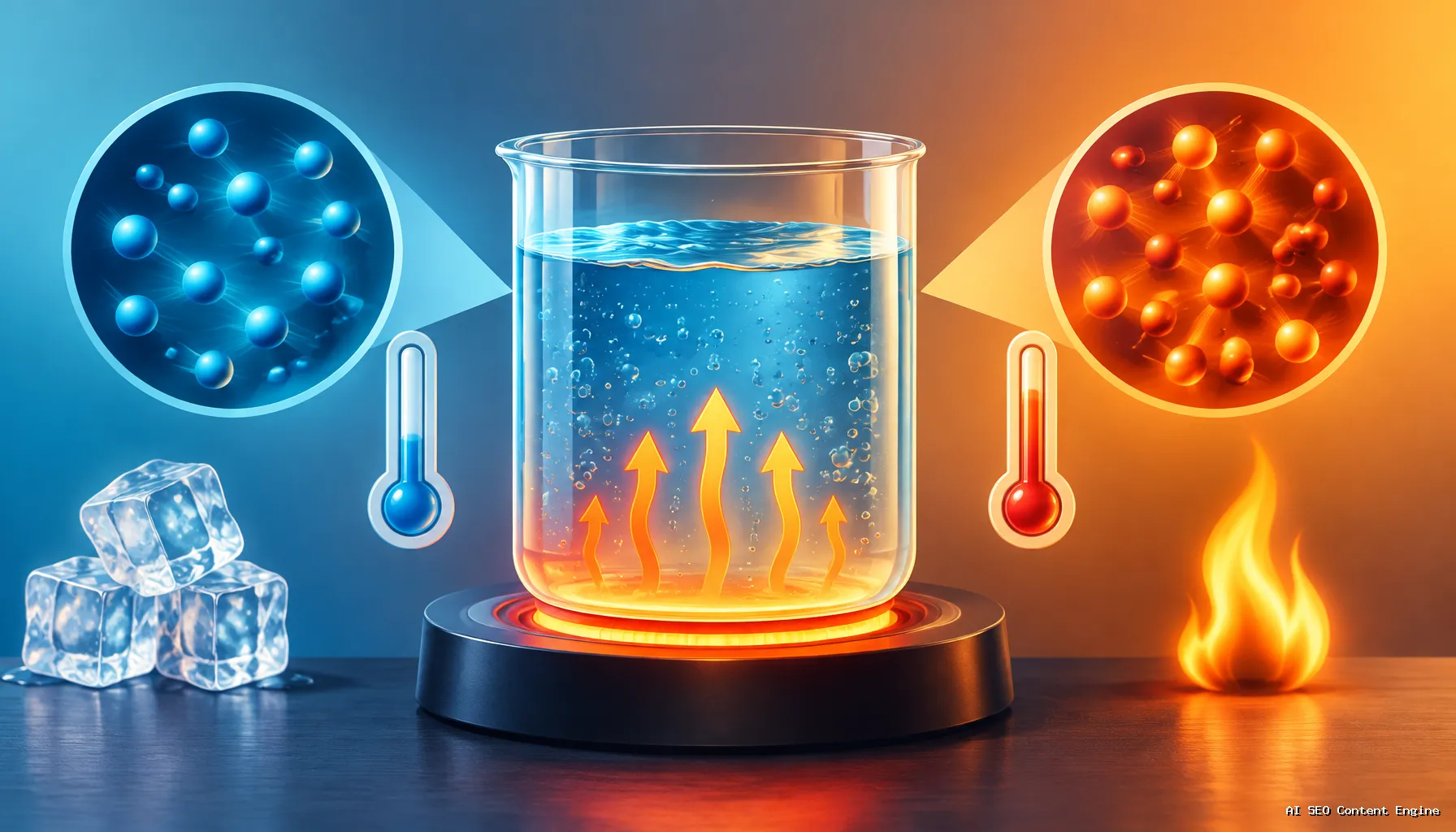
**Thermal Energy** refers to the kinetic energy of particles within a substance. It is the energy that comes from the temperature of matter. As particles move more rapidly, thermal energy increases, influencing how substances interact with their environment.
**Internal Energy**, on the other hand, encompasses all forms of energy within a system, including kinetic and potential energy at the molecular level. It is the total energy contained within a physical system, excluding energy from external sources.
The Significance of Q = mcΔT
- **Q = mcΔT** is a fundamental equation used to calculate the amount of heat (Q) absorbed or released by a substance when it undergoes a temperature change (ΔT).
- **m** stands for mass, and **c** represents the specific heat capacity, a property that indicates how much heat energy is needed to raise the temperature of a unit mass of the substance by one degree Celsius.
- This equation plays a critical role in various applications, from designing heating systems to understanding climate change.
Understanding this formula is essential for grasping the principles of the first law of thermodynamics, which states that energy cannot be created or destroyed, only transformed from one form to another. By calculating thermal energy changes, we gain insights into energy conservation and transfer processes.
Real-World Applications
The formula Q = mcΔT finds applications in numerous fields:
- **Cooking**: Predicting how much energy is needed to heat water or cook food.
- **Climate Science**: Understanding heat exchange between the Earth’s surface and the atmosphere.
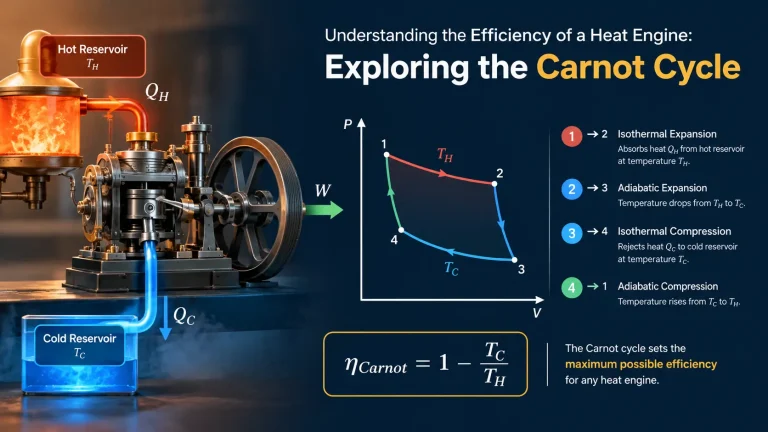
- **Engineering**: Designing systems that efficiently manage heat, such as refrigerators and heat engines.
By delving into the topic of Thermal Energy and Internal Energy — Q = mcΔT, one can also explore further resources such as the phenomenon of thermal expansion, which is closely related to these concepts. This comprehensive understanding aids in making informed decisions in both everyday life and specialized scientific endeavors.
Thermal Energy and Internal Energy — Q = mcΔT : What is the Q = mcΔT Formula?
The formula Q = mcΔT is a fundamental equation in the realm of thermodynamics, crucial for understanding how thermal energy is transferred and how internal energy changes within a system. This formula describes the amount of heat energy (Q) required to change the temperature of a given mass (m) of a substance with a specific heat capacity (c) across a temperature change (ΔT).
Breaking Down the Formula
- Q – Represents the heat energy, measured in joules (J). It signifies the amount of energy transferred into or out of a system.
- m – Denotes the mass of the substance, usually measured in kilograms (kg). It indicates how much of the material is being heated or cooled.
- c – Known as the specific heat capacity, measured in joules per kilogram per degree Celsius (J/kg°C). It is a property of the substance that indicates how much energy is needed to change the temperature of one kilogram of the substance by one degree Celsius.
- ΔT – Represents the change in temperature, measured in degrees Celsius (°C). It is calculated by subtracting the initial temperature from the final temperature.
Significance of the Q = mcΔT Formula
The equation is integral to a wide range of practical and theoretical applications, enhancing our understanding of thermal dynamics. Here’s why it matters:
- **Energy Conservation**: It supports the first law of thermodynamics, highlighting that energy is conserved during heat transfer.
- **Material Properties**: Helps in determining the energy efficiency of materials, based on their specific heat capacities.
- **Design and Engineering**: Essential in designing systems that manage heat, such as climate control systems and thermal insulators.
Practical Use Cases
The formula Q = mcΔT finds relevance in various domains:
- **Cooking**: Estimating the thermal energy needed to raise the temperature of food items.
- **Climate Studies**: Analyzing the heat exchange processes between different environmental layers.
- **Engineering Applications**: Critical in developing efficient heat engines and refrigeration cycles.
Understanding the nuances of Thermal Energy and Internal Energy — Q = mcΔT opens doors to exploring deeper thermodynamic phenomena. For example, the concept is closely tied to thermal expansion, which involves the change in a material’s dimensions as its temperature changes.
For those eager to delve further into the intricacies of energy transformations, comparing this with other energy-related equations like E = mc² in nuclear reactions can offer additional insights.
Understanding the Components: Mass, Specific Heat, and Temperature Change in Thermal Energy and Internal Energy — Q = mcΔT
In the realm of thermodynamics, understanding how heat energy is absorbed or released by a substance is crucial. The equation Q = mcΔT serves as a fundamental tool in calculating this energy transfer. To fully grasp the concept of Thermal Energy and Internal Energy — Q = mcΔT, it’s essential to break down the components of this equation: mass, specific heat, and temperature change.
Mass (m)
The mass of an object, measured in kilograms (kg), is a pivotal factor in determining how much thermal energy is required. Simply put, the greater the mass, the more energy is needed to change its temperature. This is because a larger amount of matter has more particles that require energy to increase their kinetic activity.
Specific Heat Capacity (c)
The specific heat capacity is a property intrinsic to each material, denoted by the symbol ‘c’ and measured in joules per kilogram per degree Celsius (J/kg°C). It represents the amount of heat required to raise the temperature of one kilogram of the substance by one degree Celsius. Materials with a high specific heat, like water, absorb and store more heat without a significant change in temperature, making them effective in applications requiring heat regulation.
Temperature Change (ΔT)
The temperature change, expressed in degrees Celsius (°C), is the difference between the final and initial temperatures of a substance. This component highlights the extent of the thermal energy exchange. A greater temperature change indicates a larger energy transfer, which is crucial in processes like cooking or climate studies.
Understanding these components provides a solid foundation for comprehending more complex thermodynamic concepts. For instance, the application of thermal expansion relies on the principles outlined in Q = mcΔT, as it involves the change in dimensions of materials due to temperature variations.
Moreover, the equation aligns with the first law of thermodynamics, emphasizing the conservation of energy within a system. By mastering the intricacies of mass, specific heat, and temperature change, learners can tackle advanced topics and even explore comparisons with other pivotal energy-related equations, such as E = mc² in nuclear reactions.
For further exploration, resources like the thermal energy and internal energy q mcδt explained quizlet can offer additional practice and reinforcement of these critical concepts.
Thermal Energy and Internal Energy — Q = mcΔT : Understanding the Differences
The relationship between thermal energy and internal energy forms a cornerstone of thermodynamics, yet these terms are often used interchangeably, which can lead to confusion. To grasp the essential differences and their implications, it’s vital to explore what each term specifically entails and how they relate to the equation Q = mcΔT.
Defining Thermal Energy
Thermal energy refers to the total kinetic energy of the particles in a substance due to their motion. It is a form of energy transfer between systems and is often associated with heat. The flow of thermal energy between objects occurs when there is a temperature difference, typically moving from a hotter to a cooler object until thermal equilibrium is achieved.
- **Heat Transfer Methods**: This includes conduction, convection, and radiation, which are the primary modes through which thermal energy is transferred.
- **Specific Heat Capacity**: This property dictates how much heat energy is required to change the temperature of a substance, directly tying into the Q = mcΔT equation.
Understanding Internal Energy
Internal energy is the total energy contained within a system, encompassing both the kinetic and potential energies of all particles. Unlike thermal energy, internal energy considers energy stored at the molecular level, including vibrational and rotational energy of molecules.
- **First Law of Thermodynamics**: This law states that the change in internal energy of a system is equal to the heat added to the system minus the work done by the system, reinforcing the conservation of energy principle.
Interrelation and Distinctions
While both thermal and internal energy are fundamental concepts in energy transformation processes, they serve different roles in thermodynamic analyses:
- **Thermal Energy and Internal Energy — Q = mcΔT**: This equation primarily addresses the heat transfer aspect, focusing on thermal energy involved in changing the temperature of a substance without altering its internal energy structure.
- **Internal Energy Changes**: These are more complex, often requiring additional equations and considerations, such as changes in phase or chemical reactions, where potential energy shifts play a significant role.
For those seeking deeper insights into how these energies play out in practical scenarios, resources like the thermal expansion principles highlight real-world applications of these concepts. Additionally, learners can explore the thermal energy and internal energy q mcΔt quizlet for interactive learning and reinforcement.
Applications of Thermal Energy and Internal Energy — Q = mcΔT
The formula Q = mcΔT is a cornerstone in understanding how thermal energy and internal energy interact to influence temperature changes in materials. This equation is not only fundamental in theoretical physics but also has a myriad of practical applications across various fields. Here, we delve into some of the key applications where this formula plays a crucial role:
1. Heating and Cooling Systems
- Designing HVAC Systems: In heating, ventilation, and air conditioning (HVAC) systems, Q = mcΔT helps engineers calculate the amount of heat required to achieve desired temperature changes. By understanding the specific heat capacity of materials involved, they can optimize energy efficiency and system performance.
- Refrigeration: Refrigerators and freezers rely on the principles of heat transfer described by this formula to maintain low temperatures, ensuring food preservation by effectively removing heat from the interior.
2. Industrial Processes
- Metallurgical Operations: In processes like smelting and refining, controlling temperature precisely is crucial. The formula helps in calculating how much energy is needed to heat metal ores to their melting points.
- Chemical Manufacturing: Many chemical reactions are temperature-dependent. By applying the Q = mcΔT formula, manufacturers can determine the heat input required for optimal reaction conditions.
3. Academic and Educational Use
- Physics Education: The formula is a staple in physics curricula, used to teach students about heat transfer and the principles of thermal energy. Interactive tools like the thermal energy and internal energy q mcΔt quizlet can aid in reinforcing these concepts.
- Lab Experiments: In laboratory settings, students use this formula to perform calorimetry experiments, helping them understand the energy changes involved in heating substances.
4. Environmental and Energy Studies
- Climate Research: Scientists utilize the formula to model heat exchanges within the Earth’s atmosphere and oceans, offering insights into climate change dynamics.
- Renewable Energy: Understanding how materials heat up or cool down is vital in designing efficient solar panels and geothermal systems, where managing thermal energy is key for maximizing energy output.
For those interested in exploring further, our article on thermal expansion provides additional context on how temperature changes can impact material dimensions, closely related to the concepts discussed here. Additionally, the nuclear fission vs fusion article examines energy transformations on a nuclear level, showcasing another facet of energy conversion principles.
Common Misconceptions and FAQs: Thermal Energy and Internal Energy — Q = mcΔT
When discussing the topic of thermal energy and internal energy, particularly in the context of the formula Q = mcΔT, several misconceptions often arise. Understanding these common errors is crucial for both students and professionals in fields dealing with energy transfer and thermodynamics.
Misconceptions
- Misinterpreting Q as Temperature: A frequent error is confusing Q, the heat energy, with temperature itself. While temperature is a measure of thermal energy, Q represents the energy transferred due to temperature difference, not the temperature itself.
- Overlooking Specific Heat Capacity: Some assume that all materials respond to heat input in the same way. However, the specific heat capacity (c) is a material-specific value that significantly influences how much energy is required to change a substance’s temperature.
- Ignoring Heat Transfer Methods: Many forget that heat can be transferred via conduction, convection, and radiation, which affects the application of the Q = mcΔT formula in real-world scenarios.
- Confusing Thermal Energy with Internal Energy: While related, thermal energy is specifically the part of internal energy related to temperature. Internal energy also includes potential energy within the material due to forces between particles.
Frequently Asked Questions
- What does Q = mcΔT stand for?This formula represents the relationship between the heat energy transferred (Q), the mass of the substance (m), the specific heat capacity (c), and the temperature change (ΔT). It’s a fundamental equation in thermodynamics used to calculate the energy required to change the temperature of a given mass of substance.
- How is this formula applied in real-life scenarios?From climate research to designing renewable energy systems, understanding the principles of thermal expansion and energy transfer is vital. The formula helps in modeling heat exchanges and enhancing energy efficiency.
- Can Q = mcΔT be used for phase changes?No, this formula is only applicable when there is a temperature change without a phase change. During phase changes, such as melting or boiling, the energy involved is calculated using latent heat, not specific heat capacity.
- How does the first law of thermodynamics relate to this equation?The first law of thermodynamics, which states that energy cannot be created or destroyed, underpins the Q = mcΔT equation. It ensures that the energy transferred as heat (Q) is accounted for in the internal energy changes of the substance.
- Where can I practice using this formula?Numerous resources, such as thermal energy and internal energy q mcδt explained quizlet, offer practice problems to enhance your understanding. Engaging with these materials can significantly improve your proficiency in applying the formula.
For a deeper exploration of energy transformations, consider reading our article on nuclear fission vs fusion, which provides insights into the mechanisms of energy changes at the nuclear level.
Conclusion
Understanding the relationship between thermal energy and internal energy is crucial for grasping the fundamentals of thermodynamics. The formula Q = mcΔT serves as a powerful tool in quantifying the energy required to change the temperature of a substance. By comprehending these concepts, one can better appreciate the intricacies of heat transfer and the behavior of materials under varying temperature conditions. As energy efficiency and sustainable practices become increasingly important, knowledge of these principles can significantly contribute to advancements in technology and industry.