Understanding Alpha, Beta, and Gamma Decay: How Radioactive Decay and Half-Life Work
Alpha, Beta and Gamma Decay — How Radioactive Decay and Half-Life Work is a fascinating topic that unravels the mysteries of atomic transformations and the passage of time at a subatomic level. As we delve into the mechanisms of these decay processes, you’ll discover how they contribute to the ever-changing nature of matter and energy. This exploration not only enhances your understanding of fundamental physics but also sheds light on practical applications ranging from medical treatments to energy production.
With radioactive decay being a cornerstone of nuclear science, comprehending Alpha, Beta and Gamma Decay — How Radioactive Decay and Half-Life Work is essential for anyone interested in the field. These processes dictate how unstable atoms release particles and energy, gradually transforming into more stable forms. For a deeper dive into the intricacies of these decay modes, consider visiting this comprehensive resource on radioactive decay, which provides detailed insights into the science behind these phenomena.
Introduction to Alpha, Beta and Gamma Decay — How Radioactive Decay and Half-Life Work
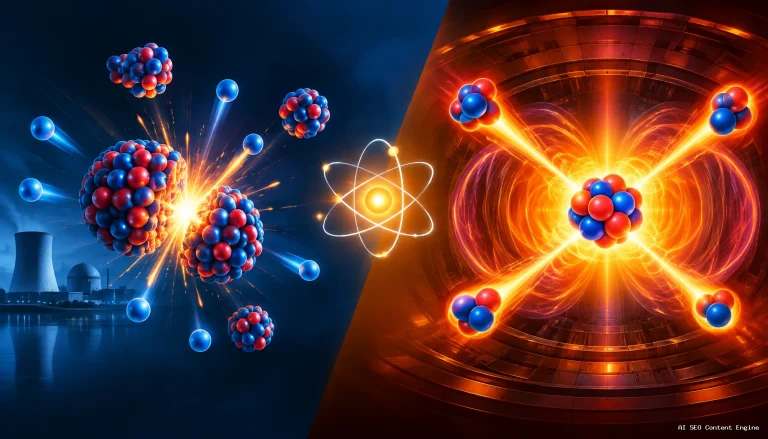
Radioactive decay is a fundamental concept in nuclear physics, describing the process by which an unstable atomic nucleus loses energy by emitting radiation. This phenomenon is pivotal to understanding how elements transform over time, leading to the formation of stable isotopes from initially unstable forms. The key processes involved in radioactive decay include alpha decay, beta decay, and gamma decay, each with distinct characteristics and implications for the stability of atomic nuclei.
**Alpha, Beta and Gamma Decay — How Radioactive Decay and Half-Life Work** is a topic that delves deeply into these transformation mechanisms, explaining how they manifest in nature and their significance in various scientific and practical applications. Let’s explore each type of decay in detail:
Alpha Decay
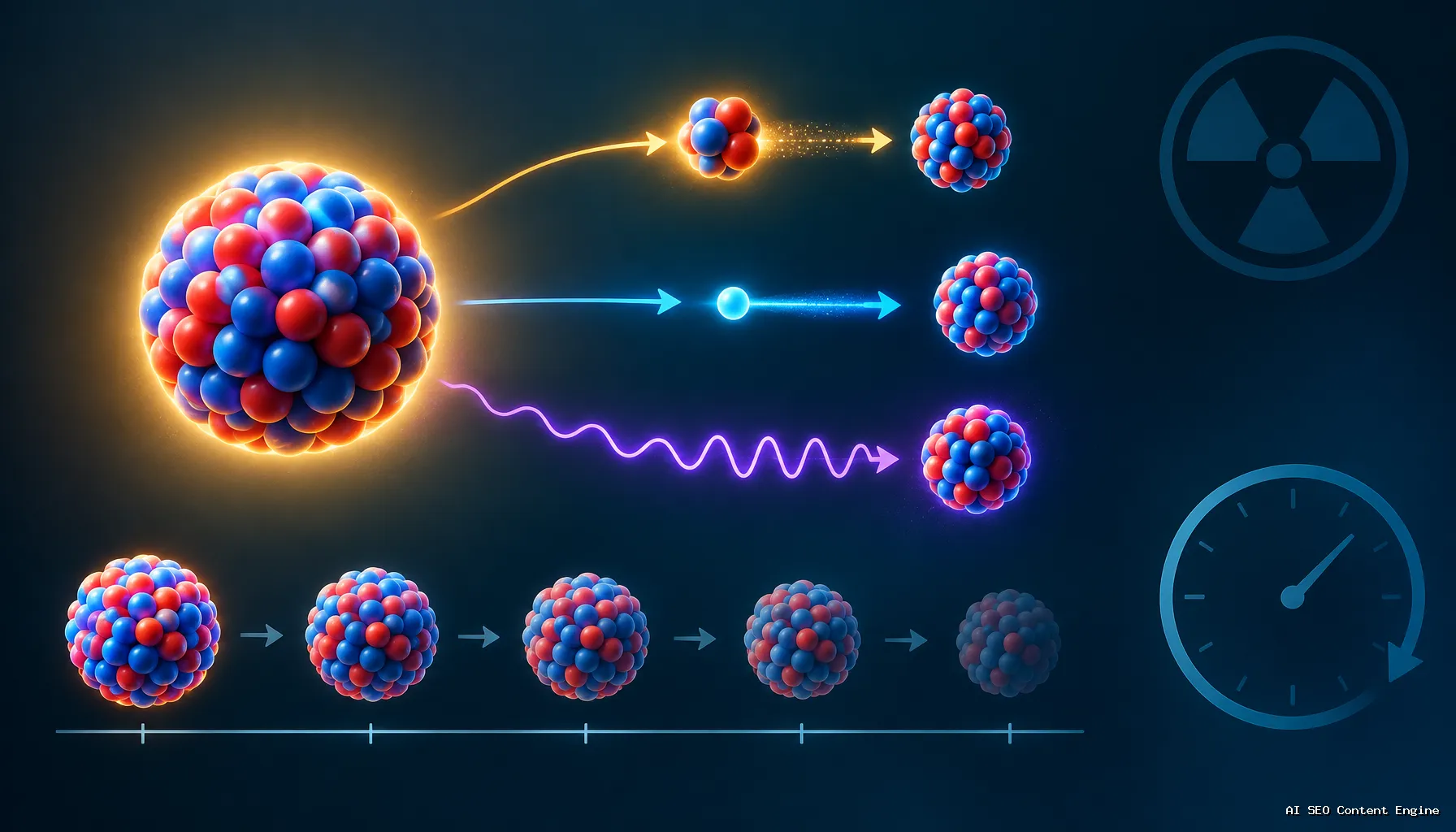
- Involves the ejection of an alpha particle, which consists of two protons and two neutrons.
- Common among heavy elements such as uranium and radium, resulting in a new element with a lower atomic number.
Beta Decay
- Occurs when a neutron transforms into a proton or vice versa, accompanied by the emission of a beta particle (an electron or positron).
- Crucial in the decay chains of many radioactive materials, altering the neutron-to-proton ratio in the nucleus.
Gamma Decay
- Involves the release of gamma rays, high-energy photons, as the nucleus shifts from a higher energy state to a lower one.
- Often follows alpha or beta decay, as the nucleus seeks stability by shedding excess energy without changing its atomic number.
Understanding these processes is essential for grasping the concept of half-life, which is the time required for half of a given amount of radioactive material to decay. This measure is critical for predicting the behavior of radioactive substances over time, whether in natural settings or engineered applications.
For further insights into the mechanisms and implications of radioactive decay, explore our in-depth article on nuclear transformations, which provides a comprehensive overview of these intriguing processes.
What is Alpha Decay? — Alpha, Beta and Gamma Decay — How Radioactive Decay and Half-Life Work
Alpha decay is a fundamental type of radioactive decay that plays a critical role in the broader understanding of nuclear transformations and decay chains. In the context of Alpha, Beta and Gamma Decay — How Radioactive Decay and Half-Life Work, alpha decay stands out as it involves the emission of an alpha particle from the nucleus. This alpha particle consists of two protons and two neutrons, effectively mirroring a helium-4 nucleus.
Characteristics of Alpha Decay
- Emission of Alpha Particles: During alpha decay, the parent nucleus ejects an alpha particle, resulting in the transformation into a new element with a reduced atomic number by two and a mass number decreased by four.
- Energy Release: The process is typically accompanied by the release of considerable energy, which contributes to the kinetic energy of the alpha particle.
- Common in Heavy Nuclei: Alpha decay is prevalent in heavy, unstable nuclei such as uranium-238 and radium-226, where the strong nuclear force cannot adequately bind the nucleons.
Why is Alpha Decay Important?
Alpha decay is significant in the study of radioactive materials and their half-lives. The predictable nature of this decay process allows scientists to determine the age of ancient artifacts through techniques like radiometric dating. Furthermore, understanding alpha decay is crucial for managing radioactive waste and harnessing the energy from nuclear reactions.
Applications and Implications
In practical terms, alpha decay has implications for both natural and engineered systems:
- Radiometric Dating: Utilized in determining the age of rocks and fossils, providing insights into geological and archaeological timelines.
- Nuclear Power: While alpha particles are typically harmless outside the body due to their low penetration ability, they are a concern inside the body, where they can cause significant cellular damage.
- Medical Applications: Certain isotopes undergoing alpha decay are used in targeted cancer therapies due to their ability to destroy cancerous cells while minimizing damage to surrounding healthy tissue.
To delve deeper into the fascinating processes of radioactive decay, including beta and gamma decay, and their implications on the concept of half-life, continue exploring our comprehensive resources on nuclear transformations and radioactive materials.
Understanding Beta Decay in Alpha, Beta and Gamma Decay — How Radioactive Decay and Half-Life Work
Beta decay is a crucial process within the spectrum of nuclear transformations, playing an integral role in understanding Alpha, Beta and Gamma Decay — How Radioactive Decay and Half-Life Work. It involves the transformation of a neutron into a proton, or a proton into a neutron, within an atomic nucleus. This transformation results in the emission of beta particles, which are high-energy, high-speed electrons or positrons.
Types of Beta Decay
- Beta Minus (β⁻) Decay: This occurs when a neutron in the nucleus converts into a proton while emitting an electron and an antineutrino. This process increases the atomic number by one, transforming the element into a new one.
- Beta Plus (β⁺) Decay: Also known as positron emission, this decay involves a proton transforming into a neutron with the emission of a positron and a neutrino, decreasing the atomic number by one.
The Mechanism of Beta Decay
During beta decay, the weak nuclear force is at work, one of the fundamental forces in the universe. This force facilitates the change in the nuclear components:
- Weak Interaction: The weak nuclear force allows quarks within the neutron or proton to change type, facilitating the transformation.
- Energy Release: The decay process releases energy, carried away by beta particles and neutrinos, which are significant in the context of radioactive decay.
Implications of Beta Decay
Understanding beta decay is essential in various fields, including:
- Medical Applications: Beta-emitting isotopes are used in medical diagnostics and treatment, particularly in cancer therapies.
- Environmental Studies: Beta decay helps in tracing the movement of substances and understanding radioactive materials’ impact on the environment.
- Nuclear Power: Beta decay contributes to the decay chains in nuclear reactors, affecting the management of radioactive waste and the stability of nuclear materials.
Beta decay is a pivotal component of nuclear physics and chemistry, providing insights into the stability and transformations of elements. To further explore these processes, including gamma decay and their implications on half-life, continue reading our in-depth articles on radioactive decay and nuclear transformations.
Exploring Gamma Decay in the Context of Alpha, Beta and Gamma Decay — How Radioactive Decay and Half-Life Work
Gamma decay is a fundamental process in the study of radioactive decay, often occurring alongside other types of decay such as alpha and beta decay. Unlike alpha and beta particles, gamma rays are not particles but rather high-energy photons. This means they do not carry an electrical charge and are instead electromagnetic radiation, akin to X-rays but with significantly higher energy.
Understanding Gamma Decay
When a nucleus undergoes alpha or beta decay, it is often left in an excited energy state. To reach a more stable configuration, the nucleus releases excess energy in the form of gamma rays. This process can be understood through several key points:
- Energy Release: Gamma decay involves the emission of gamma radiation, which is a release of energy from the atomic nucleus. This energy release does not change the number of protons or neutrons in the nucleus, but it lowers the energy level of the nucleus.
- Penetrating Power: Gamma rays possess high penetrating power, capable of passing through several centimeters of lead. This makes them both useful in various applications and a potential hazard if not properly shielded.
- Role in Decay Chains: Gamma decay often follows alpha or beta decay in decay chains, playing a crucial role in the stability of radioactive materials.
Applications and Implications
Gamma decay has significant implications and applications across numerous fields:
- Medical Imaging and Treatment: Gamma rays are employed in medical imaging techniques, such as PET scans, and in the treatment of cancer through radiotherapy.
- Industrial Uses: Gamma radiation is used in non-destructive testing and sterilization processes due to its ability to penetrate materials.
- Scientific Research: The study of gamma decay contributes to our understanding of nuclear structure and the forces that govern atomic nuclei.
Understanding gamma decay is crucial for comprehending the complete picture of Alpha, Beta and Gamma Decay — How Radioactive Decay and Half-Life Work, and its role in nuclear transformations and decay chains. This insight is vital for the safe handling and application of radioactive materials, as well as for advancing technologies that depend on nuclear processes.
The Concept of Half-Life in Alpha, Beta and Gamma Decay — How Radioactive Decay and Half-Life Work
The concept of half-life is a fundamental principle in understanding the processes of radioactive decay, including alpha decay, beta decay, and gamma decay. It is a crucial component when exploring how Alpha, Beta and Gamma Decay — How Radioactive Decay and Half-Life Work in unison to transform unstable isotopes into stable elements.
What is Half-Life?
Half-life is defined as the time required for half of the radioactive atoms in a sample to decay. This decay process alters the number of protons in the nucleus, thereby transforming the original radioactive element into a different element or isotope. The half-life is unique to each radioactive material and is unaffected by external conditions such as temperature or pressure.
Importance of Half-Life
- Predictability: Knowing the half-life of a radioactive isotope allows scientists to predict the rate at which a sample will decay, which is essential for various applications, including medical treatments and carbon dating.
- Safety: Understanding the half-life of radioactive materials is critical for ensuring safe handling and storage, especially in nuclear power plants and research facilities.
- Environmental Monitoring: The half-life of isotopes helps in tracking and managing radioactive contamination in the environment, ensuring public health and safety.
Calculating Half-Life
The calculation of half-life involves understanding exponential decay. The formula used is:
T1/2 = (0.693 / λ)
Where T1/2 is the half-life and λ is the decay constant, representing the probability of decay per unit time.
For those interested in further exploring the relationship between half-life and radioactive decay, our detailed guide on nuclear transformations and decay chains provides additional insights.
In summary, half-life is a critical concept in the realm of radioactive decay. It not only aids in understanding the intrinsic properties of isotopes but also plays a pivotal role in practical applications and safety protocols concerning radioactive materials. As we delve deeper into the study of Alpha, Beta and Gamma Decay — How Radioactive Decay and Half-Life Work, the concept of half-life remains a cornerstone in deciphering the mysteries of nuclear transformations.
Applications of Alpha, Beta and Gamma Decay — How Radioactive Decay and Half-Life Work
Understanding the process of radioactive decay, including alpha, beta, and gamma decay, is crucial not only in theoretical physics but also in a wide array of practical applications. These processes form the backbone of various technologies and methodologies that impact diverse fields such as medicine, energy, and archaeology. Let’s explore some of the significant applications:
Medical Applications
- Radiotherapy: Radioactive decay is pivotal in cancer treatment, where specific isotopes emit radiation to target and destroy malignant cells. For instance, cobalt-60, which undergoes beta decay, is commonly used in radiotherapy machines.
- Diagnostic Imaging: Techniques like PET scans utilize isotopes that undergo beta decay to visualize metabolic processes in the body. Fluorine-18 is a prominent isotope used in these scans.
Energy Production
- Nuclear Power: Alpha and beta decay processes contribute to the generation of nuclear energy. Uranium-235 and plutonium-239, through a series of decay chains, release energy that is harnessed in nuclear reactors.
- Radioisotope Thermoelectric Generators (RTGs): These devices convert heat released by radioactive decay into electricity, providing power for space missions and remote installations.
Scientific Research and Dating
- Radiocarbon Dating: Carbon-14, which undergoes beta decay, is utilized in dating archaeological and geological samples, helping to determine the age of ancient artifacts and fossils.
- Tracer Studies: In scientific research, radioactive isotopes are used as tracers to study chemical and biological processes. Their decay helps track the movement and interaction of different elements.
Industrial Applications
- Material Testing: Gamma decay is employed in nondestructive testing methods such as radiography, which inspects the integrity of structures and components.
- Smoke Detectors: Many smoke detectors contain americium-241, which undergoes alpha decay, to detect smoke particles through ionization.
Each of these applications leverages the principles of alpha, beta, and gamma decay, showcasing how understanding Alpha, Beta and Gamma Decay — How Radioactive Decay and Half-Life Work can lead to innovative solutions for contemporary challenges. The half-life of isotopes is a critical factor in determining their suitability and efficiency in these applications, ensuring safety and effectiveness in their use.
Safety Measures in Handling Radioactive Materials: Understanding Alpha, Beta and Gamma Decay — How Radioactive Decay and Half-Life Work
Handling radioactive materials requires stringent safety measures due to the potential health risks associated with exposure to radiation. A deep understanding of Alpha, Beta and Gamma Decay — How Radioactive Decay and Half-Life Work is essential for implementing effective safety protocols. Here are some critical safety measures to consider:
Personal Protective Equipment (PPE)
- Lead Aprons and Shields: These are crucial in protecting individuals from gamma decay, as gamma rays can penetrate most materials.
- Gloves: Essential for preventing direct contact with radioactive substances, especially those undergoing alpha and beta decay.
- Respirators: In environments where radioactive dust or aerosols might be present, respirators prevent inhalation of radioactive particles.
Engineering Controls
- Containment: Use of sealed containers to prevent the escape of radioactive materials during storage and transport.
- Ventilation Systems: Proper ventilation helps in dispersing radioactive gases and reducing concentration levels in the air.
Administrative Controls
- Training and Education: Regular training sessions on radioactive decay processes, including alpha decay, beta decay, and gamma decay, are vital for all personnel handling these materials.
- Access Restrictions: Limiting access to areas where radioactive materials are stored or used to only trained and authorized personnel.
- Monitoring and Surveillance: Continuous monitoring of radiation levels using dosimeters and survey meters to ensure they remain within safe limits.
Emergency Procedures
- Spill Response: Immediate containment and cleanup procedures must be in place for any accidental release of radioactive materials.
- Evacuation Plans: Clearly defined evacuation routes and assembly points in case of a radiation leak.
Implementing these safety measures helps mitigate the risks associated with the use of radioactive materials. Understanding the principles of radioactive decay, including the half-life of isotopes, plays a crucial role in effectively managing these materials. For further reading on the science behind these processes, explore our detailed section on how radioactive decay works.
Conclusion
Understanding the mechanisms of alpha, beta, and gamma decay is crucial in comprehending the broader concept of radioactive decay and its implications. These processes not only highlight the intricate nature of atomic transformations but also underline the importance of half-life in predicting the longevity and stability of radioactive substances. Whether applied in medical treatments, energy production, or scientific research, the principles of radioactive decay and half-life remain fundamental in harnessing and safely managing nuclear technology. As we continue to explore and develop our understanding of these phenomena, their relevance in both theoretical and practical applications is bound to expand, offering new insights and innovations.
Frequently Asked Questions
How does half-life work in radioactive decay?
Half-life is the time required for half of the radioactive nuclei in a sample to decay. It is a constant measure for a given isotope, reflecting the rate at which a radioactive substance undergoes decay. During each half-life period, the quantity of the substance decreases by 50%, providing a predictable pattern of decay over time.
What happens to alpha, gamma, and beta during radiation decay?
During radiation decay, alpha particles, which consist of two protons and two neutrons, are emitted from the nucleus, reducing the atomic number by two and the mass number by four. Beta decay involves the conversion of a neutron to a proton with the emission of an electron (beta particle) and an antineutrino, resulting in an increase in atomic number by one. Gamma decay involves the release of excess energy from an unstable nucleus in the form of gamma rays, without changing the number of protons or neutrons.
Are radioactive decay and half-life the same?
Radioactive decay and half-life are related but distinct concepts. Radioactive decay refers to the process by which an unstable atomic nucleus loses energy by emitting radiation. Half-life, on the other hand, is a measure of the time it takes for half of a radioactive sample to decay. While decay describes the process, half-life provides a quantitative measure of the rate at which this process occurs.
How to work out the half-life of a radioactive substance?
The half-life of a radioactive substance can be determined experimentally by measuring the time it takes for the radioactivity of a sample to reduce to half its initial value. Alternatively, if the decay constant (λ) is known, the half-life can be calculated using the formula: t1/2 = 0.693 / λ, where t1/2 is the half-life.