Understanding Standing Waves: A Guide to Nodes, Antinodes, and Resonance
What Are Standing Waves? Nodes, Antinodes and Resonance Explained — this intriguing question sets the stage for a deep dive into the fascinating world of physics. Standing waves are a fundamental concept that plays a crucial role in various scientific and engineering applications, from musical instruments to architectural acoustics. But what exactly are they, and how do nodes, antinodes, and resonance fit into the picture?
In this comprehensive guide, we will unravel the mysteries of standing waves, providing clear and concise explanations that will enhance your understanding of these captivating phenomena. Whether you’re a physics enthusiast or a student aiming to grasp these concepts more thoroughly, you’ll find valuable insights here. To ensure you have all the foundational knowledge you need, we invite you to explore our comprehensive resources that delve into related topics.
Standing waves occur when two waves of the same frequency and amplitude traveling in opposite directions interfere with each other, creating a pattern of nodes and antinodes. These patterns are not just theoretical concepts; they have practical implications and applications. For a more detailed overview, you might want to check out this informative resource on Wikipedia.
By the end of this article, you’ll have a solid grasp of what standing waves are and how nodes, antinodes, and resonance contribute to their formation and behavior. So, what are you waiting for? Dive in as we explore ‘What Are Standing Waves? Nodes, Antinodes and Resonance Explained’ and illuminate the path to better understanding these intriguing phenomena.
What Are Standing Waves? Nodes, Antinodes and Resonance Explained
Standing waves are a captivating phenomenon in physics where waves appear to be stationary, even though they result from the interference of two traveling waves moving in opposite directions. This occurs when waves of identical frequency and amplitude meet, creating a distinct pattern of nodes and antinodes. Understanding ‘What Are Standing Waves? Nodes, Antinodes and Resonance Explained’ is essential for anyone interested in the underlying principles of wave behavior in various media.
Defining Standing Waves
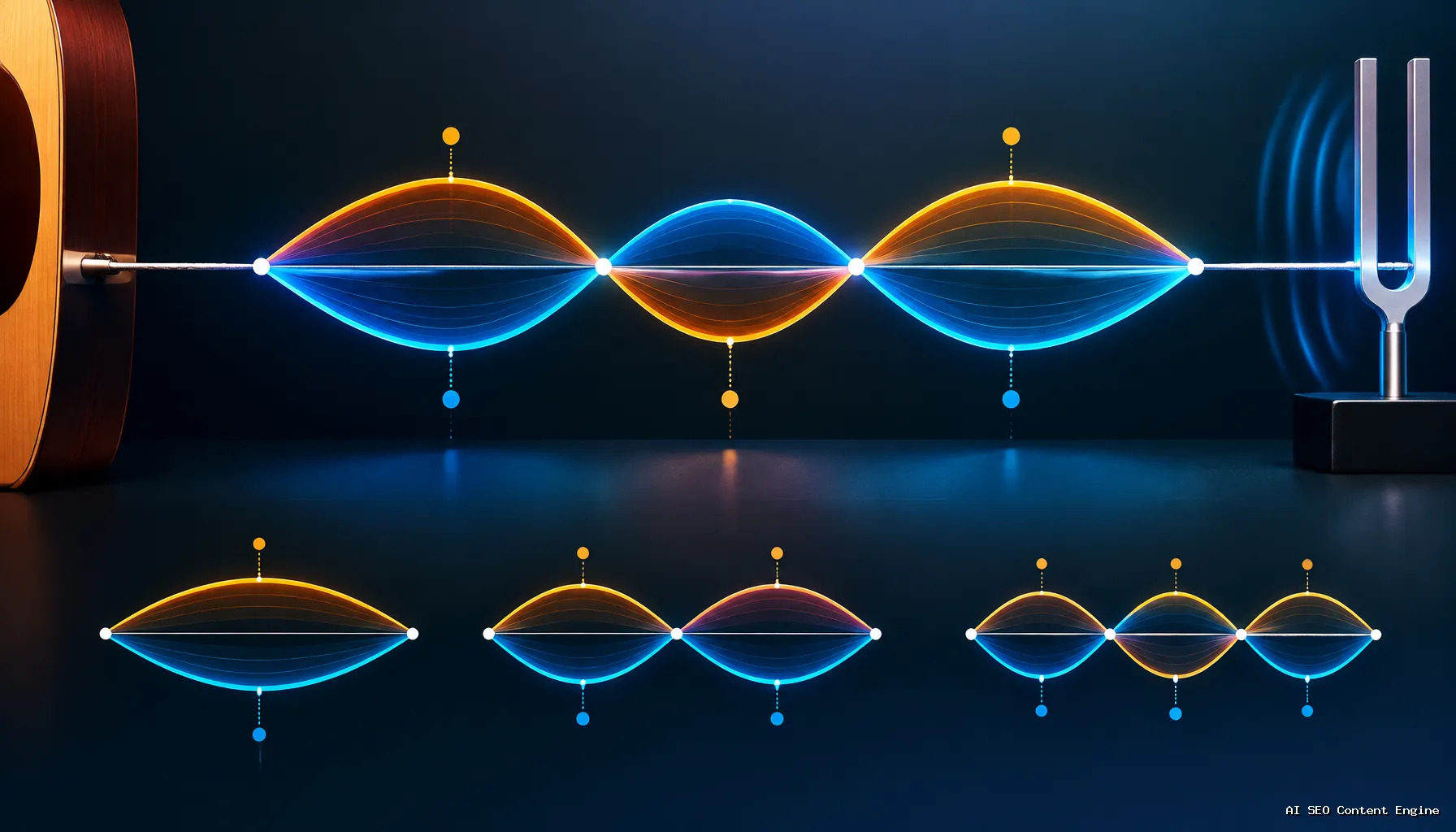
The standing waves definition can be summarized as follows: they are the result of the superposition of two waves with the same frequency, wavelength, and amplitude, moving in opposite directions. This superposition creates areas of constructive and destructive interference, leading to the formation of nodes and antinodes.
- Nodes: Points along the medium where the wave has zero amplitude, meaning there is no movement. These occur due to destructive interference.
- Antinodes: Points where the wave reaches maximum amplitude. These result from constructive interference.
Characteristics and Examples of Standing Waves
Standing waves are not just theoretical constructs; they have tangible applications and can be observed in various contexts:
- **Musical Instruments:** Standing waves are integral to the function of musical instruments, such as strings on a guitar or air columns in a flute. The resonance in standing waves amplifies sound, producing clear notes.
- **Architectural Acoustics:** Understanding standing waves helps in designing spaces with optimal sound quality, minimizing areas of dead sound (nodes) and enhancing areas of vibrant sound (antinodes).
- **Engineering Applications:** Standing waves are crucial in the design of electronic circuits and systems that rely on wave propagation, like antennas and waveguides.
For further exploration into how standing waves and related concepts play a role in energy transformations, consider reading about nuclear fission and fusion.
Understanding the nature of standing waves opens a window into the fascinating interactions of waves in different environments. As we delve deeper into nodes, antinodes, and the concept of resonance, the practical applications and theoretical underpinnings of these phenomena will become clear, enriching your comprehension of the physical world.
Understanding Nodes and Antinodes
In the realm of wave mechanics, the concepts of nodes and antinodes are fundamental to understanding how standing waves behave. Standing waves occur when two waves of identical frequency and amplitude travel in opposite directions, leading to a pattern of interference that appears stationary. This phenomenon is critical in numerous applications, from musical instruments to architectural acoustics, where the understanding of nodes and antinodes is pivotal.
Nodes: Points of Destructive Interference
Nodes are points along a medium where destructive interference occurs, resulting in no displacement. At these points, the amplitude of the wave is zero. In practical terms, this means that at the nodes, the medium appears to be at rest. Nodes are essential in defining the structure of standing waves as they provide the fixed points that allow the wave patterns to form. In musical instruments, such as stringed instruments or wind instruments, nodes represent points where no sound is produced, contributing to the unique timbre of the instrument.
Antinodes: Points of Constructive Interference
In contrast to nodes, antinodes are points of maximum displacement where constructive interference occurs. These points have the highest amplitude in a standing wave, creating areas of intense activity. Antinodes are crucial for the amplification of waves, particularly in acoustic applications where sound intensity is enhanced. The presence of antinodes allows standing waves to resonate effectively, which is why they are often associated with the production of clear, resonant tones in musical instruments.
To delve deeper into the nature of these wave interactions and their broader implications in energy transformations, you might find it beneficial to explore the discussion on nuclear fission and fusion.
The Role of Resonance in Standing Waves
Resonance in standing waves plays a significant role in amplifying sound, light, or other wave forms. When the frequency of an external force matches the natural frequency of the system, resonance occurs, leading to an increase in amplitude. This principle is why certain frequencies are more pronounced in musical instruments, as they align with the natural resonant frequencies of the instrument’s structure. Understanding resonance helps in designing spaces and devices that optimize wave interactions.
Through the lens of ‘What Are Standing Waves? Nodes, Antinodes and Resonance Explained,’ the intricate dance of nodes and antinodes emerges as a critical foundation for both theoretical exploration and practical application. As you continue to explore standing waves, the insights gained will deepen your understanding of the dynamic interplay of forces that define our acoustic and electromagnetic environments.
The Role of Resonance in Standing Waves
Resonance is a pivotal concept in understanding standing waves and is essential for answering the question, “What Are Standing Waves? Nodes, Antinodes and Resonance Explained.” Resonance occurs when an external force matches the natural frequency of a system, leading to an amplification of the wave’s amplitude. This phenomenon is a cornerstone in various applications, from musical instruments to architectural acoustics, and even in complex systems like nuclear reactions.
Understanding Resonance in Standing Waves
In the context of standing waves, resonance enhances the wave’s amplitude when the frequency of the external force aligns with the wave’s natural frequency. This amplified effect is particularly relevant in:
- Musical Instruments: Resonance is the reason why certain notes sound more pronounced. The body of an instrument is designed to resonate at specific frequencies, which enhances sound quality and volume. For example, the air column in wind instruments or the strings and body of a guitar resonate, creating rich and vibrant sounds.
- Architectural Acoustics: Understanding resonance is crucial in designing concert halls and auditoriums. Proper design ensures that sound waves are reinforced appropriately, providing clear and balanced acoustics throughout the space.
- Scientific Applications: Resonance is crucial in various scientific fields. For instance, it plays a role in nuclear fission and fusion, where resonance can affect the stability and reactions of atomic nuclei.
Nodes and Antinodes Explained in the Context of Resonance
When standing waves are at resonance, the positions of nodes and antinodes become particularly significant. Nodes, which are points of no displacement, and antinodes, which are points of maximum displacement, define the pattern and energy distribution of the wave:
- Nodes: At resonance, nodes remain fixed, creating stable points where destructive interference consistently occurs.
- Antinodes: These points experience the greatest amplitude due to constructive interference, further amplified by resonance.
Understanding the role of resonance in standing waves not only provides insight into the fundamental nature of wave behavior but also into practical applications that affect everyday life. Whether through the harmonious tones of a violin or the structural integrity of a building, resonance is a critical component of how standing waves function in the world around us.
Real-World Applications
Standing waves, with their distinctive patterns of nodes and antinodes, have a wide range of applications across various fields. Understanding resonance in standing waves is essential for harnessing their potential in practical scenarios. Below, we explore how these principles are applied in real-world contexts:
1. Musical Instruments
One of the most familiar applications of standing waves is in musical instruments. Instruments such as guitars, violins, and flutes rely on the formation of standing waves to produce sound. The strings of a guitar, for example, create standing waves when plucked, with nodes at the fixed ends and antinodes at specific points along the string. This pattern determines the pitch and tone of the sound, allowing musicians to create harmonious melodies. Explore how energy transfer impacts sound production in instruments.
2. Architectural Acoustics
In architecture, understanding nodes and antinodes explained in the context of resonance is crucial for designing spaces with optimal acoustics. Concert halls and theaters are designed to manage standing waves, ensuring sound is evenly distributed without unwanted echoes or dead spots. By strategically placing materials and structures to enhance or dampen certain frequencies, architects can create environments that enhance the auditory experience.
3. Engineering and Construction
The principles of standing waves are also critical in engineering and construction. Bridges, for example, are susceptible to resonant frequencies that can cause destructive oscillations. By analyzing the natural frequencies and using standing wave applications, engineers design structures with damping systems to prevent catastrophic failures. This ensures that the resonance does not align with the natural frequency of the structure, maintaining its integrity and safety.
4. Medical Imaging
In the medical field, techniques such as Magnetic Resonance Imaging (MRI) utilize the concept of resonance. Though not directly related to standing waves as seen in musical instruments, the principle of resonance allows MRI machines to create detailed images of the body’s internal structures by detecting the response of atomic nuclei to specific frequencies.
5. Telecommunications
Standing waves play a vital role in telecommunications, particularly in the design of antennas and waveguides. By understanding the standing waves definition, engineers can optimize the transmission and reception of signals, ensuring efficient communication over long distances. This application is crucial for maintaining the functionality of various communication systems, including satellite and radio transmissions.
These examples illustrate the diverse impact of standing waves across different industries. By addressing the question, “What Are Standing Waves? Nodes, Antinodes and Resonance Explained,” we can appreciate how these phenomena are not only a subject of academic interest but also a cornerstone of practical innovation.
Visualizing Standing Waves
Understanding the intricacies of standing waves requires a clear visual representation, enabling a deeper grasp of their behavior and applications. In this section, we explore various tools and illustrations that help in visualizing standing waves, enhancing the comprehension of questions like “What Are Standing Waves? Nodes, Antinodes and Resonance Explained”.
1. Graphical Simulations
Digital simulations are invaluable for visualizing standing waves. These tools allow users to manipulate variables such as frequency, amplitude, and tension, providing a dynamic view of nodes and antinodes. By adjusting these parameters, one can observe changes in resonance in standing waves, offering a practical demonstration of theoretical concepts.
2. Interactive Models
Interactive models, both physical and virtual, serve as educational aids in understanding the standing waves definition. These models often use strings or slinkies to show how waves can constructively and destructively interfere, leading to the formation of nodes and antinodes. Such hands-on experience is crucial for students and educators alike.
3. Use of Musical Instruments
Musical instruments provide a tangible example of standing waves in action. Instruments such as guitars or violins visibly demonstrate how strings vibrate to form standing waves. By observing the vibration patterns, one can easily see the nodes and antinodes explained in a real-world context. This practical application enriches the understanding of resonance in standing waves.
4. Educational Videos
There is a vast array of educational videos available online that vividly illustrate standing waves. These videos often combine animations with real-life demonstrations, making complex concepts more accessible. They are particularly useful for visual learners who benefit from seeing theory in action.
5. Online Platforms and Resources
- Many websites offer detailed explanations and interactive content on standing waves. Resources like Khan Academy and educational platforms provide courses that include visual aids to enhance understanding.
- For those interested in further exploring related scientific phenomena, consider reading about nuclear fission vs fusion, which also involves wave-related concepts at the atomic level.
By utilizing these tools and resources, one can gain a comprehensive understanding of standing waves and their applications. Visualizing these phenomena not only answers the fundamental question of “What Are Standing Waves? Nodes, Antinodes and Resonance Explained,” but also underscores their significance in various technological and scientific fields.
Common Misconceptions and Clarifications
Understanding the intricacies of standing waves can often be clouded by common misconceptions. These misunderstandings can hinder one’s grasp of the basic principles and applications of this fascinating phenomenon. Below, we address and clarify some of these misconceptions to provide a clearer picture of “What Are Standing Waves? Nodes, Antinodes and Resonance Explained.”
Misconception 1: Standing Waves Are Static
One prevalent misconception is that standing waves are static and unchanging. In reality, standing waves are dynamic systems where the wave pattern appears stationary because of the interference of two waves traveling in opposite directions. This creates points of no displacement (nodes) and points of maximum displacement (antinodes).
Misconception 2: All Waves Can Form Standing Waves
Not all waves have the capability to form standing waves. For standing waves to occur, specific conditions must be met, such as the presence of reflective boundaries and the interference of waves of the same frequency. This is commonly seen in musical instruments, where resonance in standing waves is harnessed to produce sound.
Misconception 3: Nodes and Antinodes Explained Incorrectly
Another common error is confusing nodes and antinodes. Nodes are points of zero amplitude where destructive interference consistently occurs, while antinodes are points of maximum amplitude resulting from constructive interference. This distinction is crucial for accurately understanding the standing waves definition and their behavior.
Clarification on Resonance
Resonance in standing waves is not just limited to musical instruments. It is a universal phenomenon that can be observed in various contexts, from architectural structures to atomic scales. For those interested in wave phenomena at an atomic level, the article on nuclear fission vs fusion provides insights into similar wave-related concepts.
Understanding Standing Wave Applications
Many assume that the applications of standing waves are limited to theoretical physics or academic studies. However, standing waves have practical implications in areas such as acoustics, telecommunications, and even in the design of musical instruments. These applications underscore the importance of accurately understanding and explaining the fundamental question: “What Are Standing Waves? Nodes, Antinodes and Resonance Explained.”
By addressing these misconceptions, we aim to enhance your comprehension of standing waves and their myriad applications, paving the way for a deeper appreciation of their role in both technology and natural phenomena.
Conclusion
Standing waves are a fascinating phenomenon in the world of physics, revealing the intricate interplay between wave interference and resonance. By understanding the concepts of nodes and antinodes, one can appreciate how these stationary patterns form and persist. Resonance, a critical aspect of standing waves, highlights the conditions under which maximum energy transfer occurs, offering insights into a variety of applications from musical instruments to engineering systems. As we continue to explore the nature of waves, standing waves remain a key concept that bridges theoretical physics and practical applications.
Frequently Asked Questions
What is a standing wave in simple terms?
A standing wave is a wave pattern that results when two waves of the same frequency and amplitude travel in opposite directions and interfere with each other, creating points that appear to be standing still. These stationary points are known as nodes, while the points of maximum oscillation are called antinodes.
What are the 7 main types of waves?
The 7 main types of waves are: mechanical waves, electromagnetic waves, matter waves, transverse waves, longitudinal waves, surface waves, and torsional waves. Each type has unique characteristics and behaviors based on the medium they travel through and the energy they carry.
What is resonance in a standing wave?
Resonance in a standing wave occurs when the frequency of external vibrations matches the natural frequency of the system, resulting in maximum energy transfer. This phenomenon causes the amplitude of the wave to increase significantly, leading to a more pronounced standing wave pattern.
What do v, λ, and f stand for?
In the context of waves, ‘v’ represents the wave velocity or speed, ‘λ’ (lambda) denotes the wavelength, which is the distance between successive crests or troughs, and ‘f’ stands for the frequency, which is the number of wave cycles that pass a point per unit of time.