
Acceleration in Physics: Types, Formula, and Step-by-Step Examples
Introduction to Acceleration in Physics
Acceleration is a fundamental concept in physics that describes how an object’s velocity changes over time. It’s not just about speed; it encompasses both the rate of change of velocity and the direction of that change. When we think about acceleration, we often visualize cars speeding up on a highway, a roller coaster plunging down a steep drop, or a ball thrown upwards against gravity. Each of these scenarios involves acceleration, making it a crucial element in understanding motion.
At its core, acceleration is defined as the change in velocity per unit of time. Mathematically, it’s expressed with the formula:
where **a** is acceleration, **Δv** (delta v) represents the change in velocity, and **Δt** (delta t) signifies the change in time. This formula can seem straightforward, but it opens the door to a rich world of analysis. For example, when a car accelerates from a standstill, its speed increases, thereby increasing its velocity.
Acceleration can be categorized into different types: uniform and non-uniform. Uniform acceleration occurs when an object experiences a constant rate of acceleration, such as a freely falling object under gravity. Non-uniform acceleration, on the other hand, describes situations where the acceleration varies, like a car that speeds up and slows down in stop-and-go traffic.
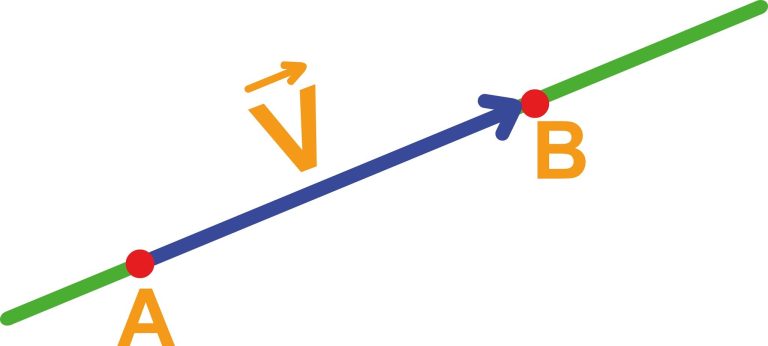
Understanding acceleration also requires grasping the concept of vectors. Velocity is a vector quantity, meaning it has both magnitude and direction. Therefore, acceleration can change not only the speed of an object but also its direction. For example, when a car turns a corner while maintaining its speed, it’s still accelerating because its direction is changing.
In real-world applications, acceleration plays a vital role in various fields. Engineers use it to design safer vehicles, while athletes analyze their acceleration to improve performance. As we delve deeper into the intricacies of acceleration, we’ll explore its various types, the formulas used to calculate it, and practical examples that showcase its significance in our daily lives. Understanding acceleration isn’t just an academic exercise; it’s a key to unlocking the mechanics of the universe.
Understanding the Concept of Acceleration
Acceleration is a fundamental concept in physics, describing how the velocity of an object changes over time. In simpler terms, it’s the rate at which an object speeds up, slows down, or changes direction. When you think about acceleration, you’re essentially considering how quickly something is going from one speed to another.
To grasp acceleration, it’s vital to understand its relationship with velocity. Velocity is a vector quantity, meaning it has both magnitude and direction. When an object experiences a change in either its speed or direction, it is said to be accelerating. For example, when a car speeds up at a stoplight, or when a roller coaster goes through a loop, acceleration is at play.
There are three primary types of acceleration: uniform acceleration, non-uniform acceleration, and instantaneous acceleration.
– **Uniform acceleration** occurs when an object’s velocity changes at a constant rate. A classic example is a car moving in a straight line while applying constant pressure on the gas pedal.
– **Non-uniform acceleration** refers to a situation where the change in velocity is not constant. Consider a bicycle rider going downhill; they may start slow and then rapidly increase speed.
– **Instantaneous acceleration** is the acceleration of an object at a specific moment in time. This can be calculated using calculus, specifically the derivative of the velocity function with respect to time.
The formula for acceleration is straightforward:
where \(a\) is acceleration, \(v_f\) is the final velocity, \(v_i\) is the initial velocity, and \(t\) is the time taken for this change.
Let’s break this down. If a car goes from 20 m/s to 60 m/s in 4 seconds, you subtract the initial velocity from the final velocity:
\(v_f – v_i = 60 m/s – 20 m/s = 40 m/s.\)
Now, divide this change in velocity by the time interval:
\(a = 40 m/s / 4 s = 10 m/s².\)
Hence, the car accelerates at a rate of \(10 m/s²\).
Understanding these principles lays the groundwork for mastering acceleration in various physics scenarios. Whether analyzing motion in a straightforward manner or tackling complex problems, knowing how to calculate and conceptualize acceleration is crucial.
Types of Acceleration: Uniform vs. Non-Uniform
Acceleration is a fundamental concept in physics that describes how an object’s velocity changes over time. It can be categorized mainly into two types: uniform acceleration and non-uniform acceleration. Understanding the distinction between these two types is crucial for solving various physics problems effectively.
Uniform Acceleration
Uniform acceleration occurs when an object changes its velocity at a constant rate. This means that the acceleration remains the same throughout the duration of the motion. A classic example is a car accelerating from rest to a certain speed on a straight road without any changes in the rate of acceleration.
In mathematical terms, uniform acceleration can be expressed using the formula:
- a = (v_f – v_i) / t
Where:
– a = acceleration
– v_f = final velocity
– v_i = initial velocity
– t = time taken
This equation shows that the change in velocity is directly proportional to time when acceleration is uniform. The graph of an object undergoing uniform acceleration will yield a straight line when plotting velocity against time, indicating a linear relationship.
Several real-world applications illustrate uniform acceleration. Consider a roller coaster that starts from rest and ascends a hill at a steady rate. The acceleration remains constant until the roller coaster begins its descent. This predictability in motion allows for more straightforward calculations in various scenarios, such as projectile motion.
Non-Uniform Acceleration
Non-uniform acceleration refers to situations where the rate of acceleration changes over time. This means that the object may speed up, slow down, or even change direction at varying rates. Common examples include a car navigating through traffic, where acceleration can fluctuate due to speed limits and stops.
Mathematically, non-uniform acceleration does not adhere to a single formula. Instead, it requires calculus for precise calculations. The acceleration can be expressed as:
- a(t) = dv/dt
Where:
– a(t) = acceleration as a function of time
– dv = change in velocity
– dt = change in time
In this case, the velocity-time graph would show a curve rather than a straight line, indicating that the acceleration is not constant. For instance, when a vehicle accelerates quickly to overtake another, then decelerates sharply, the acceleration varies significantly throughout the motion.
Understanding the difference between uniform and non-uniform acceleration is critical for problem-solving in physics. Scenarios involving non-uniform acceleration often require more complex analysis and the use of calculus, while uniform acceleration can be tackled with straightforward kinematic equations. Recognizing these distinctions allows for a deeper grasp of motion dynamics, enhancing your ability to predict and calculate outcomes effectively.
The Formula for Acceleration: Derivation and Explanation
Acceleration is a core concept in physics, representing the rate of change of velocity over time. It’s not just an abstract idea; it has practical implications in everything from everyday motion to advanced engineering. Let’s break down the formula for acceleration and understand how it’s derived.
Acceleration (a) is defined mathematically as the change in velocity (Δv) divided by the change in time (Δt). The standard formula looks like this:
Here, Δv is the difference between the final velocity (v_f) and the initial velocity (v_i). Therefore, we can rewrite the formula as:
This formula tells us that if an object’s velocity changes over a specific time interval, it is accelerating. For instance, if a car goes from 0 to 60 miles per hour in 5 seconds, you can calculate its acceleration using the formula above.
To derive the formula, we start with the fundamental definitions. Velocity is defined as displacement (s) over time (t):
When velocity changes, it indicates that an object is either speeding up or slowing down. The key here is understanding that acceleration describes how quickly this change occurs.
Let’s say you have an object accelerating uniformly. This means that the acceleration remains constant over the time interval. Under these conditions, you can use the kinematic equations, which relate position, velocity, acceleration, and time. The most relevant of these for our discussion is:
In this equation, s represents the displacement, and it shows how acceleration affects the distance covered by an object over time. If you know the initial velocity and the time, you can rearrange the equation to solve for acceleration:
This derivation illustrates just how interconnected these concepts are. Acceleration isn’t just a number; it’s a measure of how quickly an object’s motion changes, directly impacting how far it travels during that time.
In conclusion, mastering the formula for acceleration is crucial for understanding motion in physics. The formula a = Δv / Δt is foundational, showing how velocity changes over time. By grasping this concept, you can better analyze real-world scenarios, from cars accelerating on highways to rockets launching into space. Understanding this connection sets the stage for deeper studies in dynamics and motion.
Calculating Acceleration: Step-by-Step Examples
Understanding how to calculate acceleration is essential for mastering physics. Let’s break it down with practical examples to solidify your grasp of the concepts.
Example 1: A Car Accelerating from Rest
Imagine a car that starts from rest and accelerates to a speed of 20 meters per second (m/s) in 5 seconds. To find the acceleration, you can use the formula:
a = (v_f – v_i) / t
Here, v_f is the final velocity (20 m/s), v_i is the initial velocity (0 m/s, since it starts from rest), and t is the time (5 seconds).
Plugging in the values:
a = (20 m/s – 0 m/s) / 5 s = 20 m/s / 5 s = 4 m/s²
The car’s acceleration is 4 meters per second squared (m/s²). This means for every second that passes, the car’s speed increases by 4 m/s.
Example 2: A Bicycle Slowing Down
Now, consider a bicycle moving at a speed of 15 m/s that comes to a stop in 3 seconds. We’ll again use the acceleration formula:
a = (v_f – v_i) / t
In this case, v_f is 0 m/s (it stops), v_i is 15 m/s, and t is 3 seconds.
Substituting the values into the formula:
a = (0 m/s – 15 m/s) / 3 s = -15 m/s / 3 s = -5 m/s²
The negative sign indicates that the bicycle is decelerating. The acceleration is -5 m/s², meaning the bicycle slows down by 5 m/s every second.
Example 3: An Object in Free Fall
Consider an object dropped from a height, accelerating due to gravity. The acceleration due to gravity is approximately 9.81 m/s². If this object falls for 2 seconds, you can find its final velocity using:
v_f = v_i + a * t
Assuming the object starts from rest (v_i = 0 m/s), we plug in the values:
v_f = 0 m/s + (9.81 m/s² * 2 s) = 0 m/s + 19.62 m/s = 19.62 m/s
After 2 seconds, the object reaches a speed of 19.62 m/s, illustrating how gravitational acceleration impacts motion.
These examples highlight various scenarios involving acceleration. Whether an object is speeding up, slowing down, or falling, the principles remain consistent. By mastering these calculations, you’ll enhance your understanding of the physical world and its dynamics.
Real-World Applications of Acceleration
Acceleration isn’t just a theoretical concept in physics; it plays a crucial role in our everyday lives and various industries. From automotive engineering to space exploration, understanding acceleration helps in designing systems that are safer and more efficient. Let’s explore some specific real-world applications where acceleration is essential.
Automotive Industry
In the automotive sector, acceleration is a key factor in vehicle performance. Engineers use acceleration metrics to design engines that respond quickly to driver input. The 0-60 mph time is a common performance metric that indicates how quickly a car can accelerate. For instance, high-performance sports cars like the Tesla Model S can go from 0 to 60 mph in under 2 seconds, thanks to advanced electric drivetrains.
Moreover, manufacturers conduct crash tests to study how vehicles accelerate and decelerate during collisions. Understanding these forces helps improve safety features, like airbags and seatbelts, ensuring they activate at the right moment to protect passengers.
Aerospace Engineering
In aerospace, acceleration is fundamental for spacecraft design. Engineers calculate the required thrust to overcome Earth’s gravitational pull during launch. For example, the Space Shuttle developed a launch acceleration of about 3 g (three times the acceleration due to gravity) to reach orbit. This high acceleration is crucial for escaping Earth’s atmosphere and achieving orbital velocity.
Additionally, acceleration data from spacecraft is used to assess the forces astronauts experience during launch and re-entry. Understanding these forces helps in designing more comfortable and safer rides for astronauts.
Sports Science
Acceleration also plays a pivotal role in sports. Athletes rely on acceleration for performance improvement. Sprinters, for instance, focus on their acceleration phase to maximize their speed over short distances. Coaches often use technology to measure an athlete’s acceleration in training, helping them develop techniques to enhance their starts.
In team sports, understanding acceleration can improve strategies. For example, a soccer player’s ability to accelerate quickly can create space on the field, allowing for better scoring opportunities. Coaches analyze players’ acceleration data to fine-tune training regimens that focus on explosive speed.
Consumer Electronics
Acceleration sensors are now commonplace in consumer electronics. Smartphones, for example, use accelerometers to detect orientation and motion. This technology allows for features like screen rotation and step counting. When you tilt your phone, the accelerometer measures the change in acceleration, instantly adjusting the display.
Wearable fitness trackers also utilize acceleration data to monitor physical activity. By measuring the acceleration of a user’s movements, these devices can estimate calories burned and track exercise intensity. This integration of acceleration technology enhances user experience and promotes healthier lifestyles.
In summary, acceleration is a fundamental concept that has wide-ranging applications across various fields. From improving vehicle safety to enhancing athletic performance, understanding acceleration allows us to innovate and optimize the world around us.
Common Misconceptions about Acceleration
Acceleration is a fundamental concept in physics, yet it’s often surrounded by misconceptions that can lead to confusion. Let’s clear some of these up.
Acceleration Means Speeding Up
Many people think acceleration solely refers to speeding up. While it does involve increasing speed, that’s only part of the story. Acceleration also includes any change in velocity, which means it can occur when an object slows down or changes direction. For instance, a car taking a sharp turn is accelerating even if its speed remains constant. This directional change is vital in understanding real-world applications of physics.
Acceleration is Always Positive
Another common belief is that acceleration is always a positive value. This misconception stems from equating acceleration with an increase in speed. In reality, acceleration can be negative, known as deceleration. For example, when a car applies brakes, it experiences negative acceleration as it slows down. In this case, the acceleration value is less than zero, but it’s just as important as positive acceleration in analyzing motion.
Acceleration Depends Only on Force
Some assume that acceleration is determined solely by the force applied to an object. While force is a significant factor, it’s also essential to consider mass. According to Newton’s second law, acceleration (a) is directly proportional to the net force (F) acting on an object and inversely proportional to its mass (m). The formula is expressed as F = m × a. This relationship means that a larger force results in greater acceleration, but increasing an object’s mass can lead to less acceleration for the same force.
Acceleration is the Same as Velocity
Acceleration and velocity are often confused, but they represent different concepts. Velocity refers to an object’s speed in a specific direction, while acceleration measures how that velocity changes over time. For example, if a car travels at 60 mph north, its velocity is constant. If it starts to speed up to 80 mph in the same direction, it experiences acceleration. Confusing these terms can lead to misinterpretations in physics problems or real-life scenarios.
All Acceleration is Uniform
Finally, there’s the misconception that all acceleration occurs uniformly. Uniform acceleration means that the rate of change of velocity is constant. However, many real-world situations involve variable acceleration, where the rate changes over time. A roller coaster, for instance, accelerates at different rates throughout its course, influenced by factors like gravity and friction. Understanding this distinction is critical for accurately modeling motion in various scenarios.
Addressing these common misconceptions is crucial for grasping the concept of acceleration in physics. A clear understanding of acceleration’s nuances helps students and enthusiasts alike to apply these principles effectively in both academic and practical contexts.
Acceleration in Different Fields of Physics
Classical Mechanics
In classical mechanics, acceleration is fundamental. It’s defined as the rate of change of velocity over time. When a car accelerates from a stoplight, it experiences linear acceleration. The formula used is \( a = \frac{\Delta v}{\Delta t} \), where \( \Delta v \) is the change in velocity and \( \Delta t \) is the time interval.
Consider a car that goes from 0 to 60 km/h in 5 seconds. Here, the acceleration can be calculated as follows:
– Initial velocity (\( v_i \)) = 0 km/h
– Final velocity (\( v_f \)) = 60 km/h
– Time (\( t \)) = 5 seconds
First, convert the speed to meters per second: \( 60 \text{ km/h} = \frac{60 \times 1000}{3600} = 16.67 \text{ m/s} \). Plugging into the formula gives:
\[ a = \frac{16.67 \text{ m/s} – 0}{5 \text{ s}} = 3.33 \text{ m/s}^2 \]
This acceleration is crucial for understanding motion in everyday life.
Electromagnetism
In electromagnetism, acceleration takes on a different flavor. Charged particles experience acceleration when subjected to electric fields. For example, when an electron moves through a uniform electric field, it accelerates based on \( F = ma \), where \( F \) is the force exerted on it by the electric field.
The force on a charged particle is given by \( F = qE \), where \( q \) is the charge and \( E \) is the electric field strength. If an electron with a charge of \( -1.6 \times 10^{-19} \text{ C} \) enters a field of \( 1000 \text{ N/C} \), its acceleration can be derived from \( a = \frac{F}{m} \). The mass of the electron is \( 9.11 \times 10^{-31} \text{ kg} \).
Calculating the force:
\[ F = (-1.6 \times 10^{-19} \text{ C})(1000 \text{ N/C}) = -1.6 \times 10^{-16} \text{ N} \]
Now applying it to find acceleration:
\[ a = \frac{-1.6 \times 10^{-16} \text{ N}}{9.11 \times 10^{-31} \text{ kg}} \approx -1.76 \times 10^{14} \text{ m/s}^2 \]
That’s an astonishing acceleration, illustrating how electric fields can dramatically influence particle motion.
Astrophysics
In astrophysics, acceleration plays a crucial role in understanding celestial bodies. Take gravitational acceleration, for instance. The acceleration due to gravity on Earth is approximately \( 9.81 \text{ m/s}^2 \). This value varies depending on altitude and location but is essential for calculating trajectories of satellites or spacecraft.
Using Newton’s law of universal gravitation, the acceleration \( a \) experienced by an object due to gravity can be expressed as:
\[ a = \frac{GM}{r^2} \]
where \( G \) is the gravitational constant, \( M \) is the mass of the celestial body, and \( r \) is the distance from the center of the mass.
For example, consider a satellite in low Earth orbit at an altitude of 2000 km. The radius \( r \) from the center of the Earth becomes approximately 6,371 km + 2000 km = 8,371 km or \( 8.371 \times 10^6 \text{ m} \). Substituting \( G = 6.674 \times 10^{-11} \text{ N m}^2/\text{kg}^2 \) and \( M = 5.972 \times 10^{24} \text{ kg} \), we find:
\[ a = \frac{(6.674 \times 10^{-11})(5.972 \times 10^{24})}{(8.371 \times 10^6)^2} \approx 9.12 \text{ m/s}^2 \]
This calculation shows the acceleration acting on satellites, critical for missions involving orbital mechanics and satellite launches.
Understanding acceleration across these distinct fields allows physicists to predict, analyze, and innovate within their domains effectively.
Acceleration in Everyday Life: Practical Examples
Acceleration isn’t just a concept confined to physics textbooks. It plays a vital role in our daily experiences, shaping how we interact with the world. Let’s explore some practical examples that illustrate acceleration in everyday life.
1. Vehicles on the Road
Consider a car speeding up at a traffic light. When the light turns green, the driver presses the accelerator. The car’s initial speed is zero, and it rapidly increases as the engine generates power. This increase in speed represents acceleration.
The formula for acceleration is:
a = (v_f - v_i) / t
Where a is acceleration, v_f is final velocity, v_i is initial velocity, and t is time. If a car goes from 0 to 60 mph in 5 seconds, you can calculate its acceleration as:
a = (60 mph - 0 mph) / 5 s = 12 mph/s
This simple calculation reveals how acceleration impacts driving dynamics, helping us understand speed limits, safe driving practices, and fuel efficiency.
2. Roller Coasters
Roller coasters are another thrilling example of acceleration in action. As the coaster climbs a hill, it slows down, experiencing negative acceleration due to gravity. Once it crests the hill, it begins to descend rapidly, undergoing positive acceleration.
For instance, if a roller coaster drops from a height of 100 feet, it accelerates due to gravitational force, reaching speeds that create exhilarating experiences for riders. The acceleration felt while plummeting is a result of the change in speed over time, vividly illustrating the physics of motion.
3. Sports Performance
Acceleration also plays a significant role in sports. Think about a sprinter starting a race. The moment the starting gun fires, the athlete pushes off the blocks, rapidly accelerating to reach top speed.
In track and field, the focus is often on how quickly an athlete can transition from rest to maximum speed. If a sprinter reaches 10 meters per second within 3 seconds, their acceleration can be calculated as follows:
a = (10 m/s - 0 m/s) / 3 s = 3.33 m/s²
This acceleration is critical for understanding performance, training regimens, and how to optimize speed for competitive advantage.
4. Everyday Objects
Acceleration isn’t limited to large-scale examples. Even everyday objects like bicycles exhibit acceleration. When you pedal harder, you increase your speed. If you were to monitor your speed on a flat surface, you’d notice a gradual increase in velocity, showcasing how acceleration operates in real time.
Again, using the formula for acceleration, if you increase your bike’s speed from 5 mph to 15 mph in 4 seconds, the calculation would look like this:
a = (15 mph - 5 mph) / 4 s = 2.5 mph/s
Understanding these everyday examples of acceleration can enhance our comprehension of physics and improve our interactions with our environment. Whether driving a car, riding a roller coaster, sprinting, or cycling, acceleration is the unseen force that governs motion and speed.
Conclusion: Mastering Acceleration for Future Learning
Understanding acceleration is more than just a formula; it’s a gateway to grasping the principles of motion that govern our universe. Whether you’re a student preparing for exams or a curious mind wanting to know how things work, mastering acceleration can offer insights that extend beyond physics.
Acceleration connects directly to everyday experiences. Think about how a car speeds up when you press the gas pedal. The concepts you’ve learned about acceleration apply in practical scenarios like driving, sports, and even space travel. When you comprehend how different factors influence acceleration, you can predict the outcomes of various motions in real life.
The formulas for acceleration—like \( a = \frac{\Delta v}{\Delta t} \)—are straightforward, but their application can be nuanced. Consider the various types of acceleration: uniform and non-uniform. Each type has unique characteristics and implications. For instance, uniform acceleration means consistent changes in velocity, while non-uniform acceleration involves varying changes. Practicing problems in both areas can prepare you for complex situations you may encounter in advanced studies.
Let’s not overlook the significance of graphical representation. Acceleration can be depicted on graphs, and understanding these visuals can deepen your comprehension. For instance, a velocity-time graph can show how acceleration affects the speed of an object over time. The slope of this graph gives you direct insight into the acceleration value. Analyzing these graphs provides a visual learning experience, making abstract concepts more concrete.
Engagement with real-world examples—like calculating the acceleration of a roller coaster or a falling object—can reinforce your understanding. Dive into experiments, simulations, or online tools that allow you to manipulate variables and observe changes in acceleration. This hands-on approach solidifies the theoretical knowledge you’ve gathered.
Moreover, consider how acceleration plays a role in technology and engineering. From designing safer vehicles to developing efficient transport systems, acceleration is a fundamental aspect. The more you understand it, the better equipped you will be to innovate and solve problems in various fields.
In conclusion, mastering acceleration is not just about memorizing equations. It’s about seeing the bigger picture and applying the principles you learn in meaningful ways. Embrace every opportunity to explore, experiment, and apply these concepts. Your journey into the realm of physics will not only enhance your academic performance but also enrich your appreciation of the world around you. Keep pushing the boundaries of your understanding, and acceleration will become a powerful tool in your learning arsenal.